<?xml version="1.0" encoding="UTF-8"?>
<?xml-stylesheet type="text/xsl" href="/stylesheets/feed.atom.xml" media="screen"?>
<feed xml:lang="en-US" xmlns="http://www.w3.org/2005/Atom">
  <id>tag:romancelanguages.nd.edu,2005:/news-events/news</id>
  <link rel="alternate" type="text/html" href="https://romancelanguages.nd.edu"/>
  <link rel="self" type="application/atom+xml" href="https://romancelanguages.nd.edu/news-events/news.atom"/>
  <id>tag:romancelanguages.nd.edu,2005:/latest</id>
  <title>Department of Romance Languages and Literatures | News</title>
  <updated>2026-10-14T09:40:00-04:00</updated>
  <link rel="alternate" type="text/html" href="https://romancelanguages.nd.edu/"/>
  <link rel="self" type="application/atom+xml" href="https://romancelanguages.nd.edu//news-events/news.atom"/>
  <subtitle>Notre Dame’s Department of Romance Languages and Literatures offers undergraduate programs in French, Italian, Portuguese, Romance Languages, and Spanish; and graduate programs in French and Francophone Studies, Iberian and Latin American Studies, and Ita</subtitle>
  <entry>
    <id>tag:romancelanguages.nd.edu,2005:News/186251</id>
    <published>2026-10-14T09:40:00-04:00</published>
    <updated>2026-10-14T09:40:10-04:00</updated>
    <link rel="alternate" type="text/html" href="https://romancelanguages.nd.edu/news-events/news/italian-graduate-student-alessandro-matone-co-translates-flannery-oconnors-journals/"/>
    <title>Italian Graduate student Alessandro Matone co-translates Flannery O’Connor’s journals</title>
    <summary type="text">
      <![CDATA[Italian graduate student Alessandro Matone has co-edited and co-translated, together with Fernanda Rossini, Diari: Matematica avanzata e Diario di preghiera,…]]>
    </summary>
    <content type="html">
      <![CDATA[<p>Italian graduate student <a href="https://romancelanguages.nd.edu/people/graduate-students/alessandro-matone/"><strong>Alessandro Matone</strong></a> has co-edited and co-translated, together with Fernanda Rossini, <a href="https://www.edizioniares.it/prodotto/diari-2/"><strong><em>Diari: Matematica avanzata e Diario di preghiera</em></strong>,</a> a new Italian edition that brings together, for the first time in a single volume, two personal journals by acclaimed American author Flannery O’Connor.</p>
<p>The volume offers Italian readers an opportunity to explore O’Connor’s intellectual and spiritual life through her personal writings.</p>
<p>The publication has already attracted attention in the Italian press, including coverage in a <a href="https://t.e2ma.net/click/68holi/i6nsezrb/6stedn">major Italian newspaper</a>.</p>
<p>Congratulations to Alessandro on this significant scholarly and literary achievement!</p>
<p class="attribution">Originally published by <span class="rel-author">Demetrio Yocum</span> at <span class="rel-source"><a href="https://italianstudies.nd.edu/news-events/news/italian-graduate-student-alessandro-matone-co-translates-flannery-oconnors-journals/">italianstudies.nd.edu</a></span> on <span class="rel-pubdate">October 12, 2026</span>.</p>]]>
    </content>
    <link rel="enclosure" type="image/webp" href="https://romancelanguages.nd.edu/assets/682538/screenshot_2026_10_12_at_102140_am.webp" title="Flannery O'Connor's &quot;Diari&quot; cover features a white peacock with ornate tail feathers."/>
    <author>
      <name>Demetrio Yocum</name>
    </author>
  </entry>
  <entry>
    <id>tag:romancelanguages.nd.edu,2005:News/186252</id>
    <published>2026-10-14T09:40:00-04:00</published>
    <updated>2026-10-14T09:40:38-04:00</updated>
    <link rel="alternate" type="text/html" href="https://romancelanguages.nd.edu/news-events/news/flta-spotlight-ester-oliveira/"/>
    <title>FLTA Spotlight: Ester Oliveira</title>
    <summary type="text">
      <![CDATA[For Ester Oliveira, this year’s Portuguese Foreign Language Teaching Assistant at the University of Notre Dame, teaching a language means more than helping students communicate. It is also an opportunity to challenge assumptions, introduce different perspectives, and connect people whose experiences…]]>
    </summary>
    <content type="html">
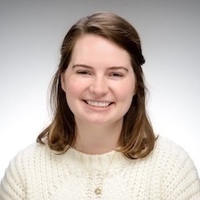
      <![CDATA[<p>For Ester Oliveira, this year’s Portuguese Foreign Language Teaching Assistant at the University of Notre Dame, teaching a language means more than helping students communicate. It is also an opportunity to challenge assumptions, introduce different perspectives, and connect people whose experiences might otherwise never intersect. Originally from Belém, in the Brazilian state of Pará, Ester brings to Notre Dame her experience as an educator and a strong connection to the region that shaped her understanding of Brazil.</p>
<p>Located in northern Brazil, at the gateway to the Amazon, Belém is a city with a distinctive cultural identity. Its food, music, traditions, and relationship with the Amazon are central to Ester’s experience of growing up there. Although Brazil is often represented internationally through images of Rio de Janeiro, São Paulo, Carnival, and beaches, Ester comes from a region with its own histories and perspectives. For her, sharing Brazilian culture means going beyond these familiar images and showing students that there is no single way to experience being Brazilian.</p>
<p>Ester attended public schools throughout her childhood and adolescence before earning a degree in English Language and Literature at the Federal University of Pará. She is also pursuing a specialization in English language teaching at the Federal University of Minas Gerais. Her academic interests include linguistics, language acquisition, and teaching methodologies, particularly how languages can be taught meaningfully to students from different backgrounds.</p>
<p>Her experience in Brazilian public education has influenced how she understands educational opportunities. Access to quality language instruction can vary considerably depending on a student’s circumstances, and learning another language can open doors that are not equally available to everyone. Ester believes education should expand people’s possibilities rather than reinforce the limitations imposed by their backgrounds. Her journey from public schools in Belém to teaching at an American university reflects the opportunities that education and international exchange can create.</p>
<p>Before coming to Notre Dame, Ester taught English in Brazil, including at a private language school. Working with students of different ages and backgrounds helped her understand that effective teaching requires more than knowledge of grammar and vocabulary. Students bring different motivations, experiences, and levels of confidence into the classroom. For Ester, teaching means recognizing those differences and creating an environment where students feel comfortable participating, asking questions, and making mistakes.</p>
<p>Ester first learned about the Fulbright Program through educators from American universities who traveled to Brazil to teach. Meeting them introduced her to the possibility of participating in a similar exchange. She realized that the experience could work in the opposite direction: she could travel to the United States not simply to learn, but to share her own language, culture, and experiences.</p>
<p>When Ester was selected for the 2026–2027 Fulbright Foreign Language Teaching Assistant Program, she was placed at Notre Dame, an institution she had already heard about through previous scholarship recipients from Pará. The program offered her an opportunity to develop professionally while experiencing American academic life.</p>
<p>For Ester, however, the significance of Fulbright extends beyond living abroad. International education is sometimes understood primarily as an opportunity to learn from another country, but she believes cultural exchange should work in both directions. While she hopes to learn from American educators and students, she also wants them to recognize the knowledge and perspectives she brings from Brazil. Meaningful exchange, in her view, requires understanding that everyone involved has something valuable to contribute.</p>
<p>This is Ester’s first time in the United States, and living in the Midwest has introduced her to unexpected cultural differences. One of her earliest observations was how reserved people initially seemed compared with the warmer, more spontaneous social interactions she was accustomed to in Brazil. She was also surprised by the size of American department stores and the variety of accents she encounters on campus. These everyday experiences have reminded her that cultural differences are not limited to the traditions people typically associate with a country.</p>
<p>At Notre Dame, Ester helps students develop their Portuguese skills while introducing them to Brazilian culture. She has found her students curious, receptive, and eager to learn. Many have previously studied Spanish, which helps them recognize similarities between the languages but can also lead to confusion. One common challenge is transferring Spanish vocabulary, pronunciation, or grammatical structures into Portuguese. Ester sees these connections as a natural part of learning and an opportunity to help students understand how languages influence one another.</p>
<p>She encourages students to approach language learning as communication rather than simply memorizing grammatical rules. Her advice is to practice speaking and reading regularly, even when they do not understand every word or feel entirely confident. She believes progress comes from engaging with the language, taking risks, and accepting mistakes as part of the process.</p>
<p>Outside the classroom, Ester participates in Portuguese language and cultural activities that allow students to encounter Brazil through conversation, music, and shared experiences. Her connection to Pará is especially important in these activities. Belém is known for foods such as açaí and tacacá and musical traditions including carimbó and tecnobrega. Through these examples, Ester hopes to introduce students to aspects of Brazil they might not otherwise encounter.</p>
<p>She also wants to challenge the tendency to portray the Amazon exclusively as a rainforest or an environmental issue. The region is home to cities, communities, artistic traditions, and people whose experiences are often overlooked in international representations. For Ester, representing Pará means showing that the Amazon is not simply a place to be studied or protected, but also a place where people live, create, and contribute to Brazilian society.</p>
<p>This perspective connects directly to her understanding of language education. Learning another language allows people to encounter histories, ideas, and experiences different from their own. It can encourage curiosity and empathy while challenging simplified assumptions about unfamiliar cultures. Ester believes that becoming proficient in another language matters, but so does developing the openness to understand people who see the world differently.</p>
<p>Teaching Portuguese has also encouraged Ester to reconsider her relationship with her native language. After years of teaching English, she now explains cultural and linguistic details that once felt so familiar they required little reflection. The experience allows her to see her own background from new perspectives while continuing to learn from her students and colleagues.</p>
<p>After Fulbright, Ester hopes to continue in academia, pursue a master’s degree, and explore opportunities to remain in the United States. Her interests in education and language teaching remain central to her plans.</p>
<p>Her favorite Portuguese word is saudade, which has no exact English equivalent. It describes a deep longing for someone, somewhere, or something absent, often combining sadness with affection and gratitude. For Ester, living thousands of miles from Belém, the word captures the experience of building connections somewhere new while remaining attached to the people and places that shaped her.</p>
<p>Ultimately, Ester hopes her time at Notre Dame will encourage students to see Brazil beyond familiar stereotypes and understand language learning as an opportunity for genuine connection. For her, cultural exchange is not simply presenting one culture to another. It is an ongoing conversation in which everyone can learn, question assumptions, and develop a broader understanding of the world.</p>
<p><em>About the CSLC</em></p>
<p><em>The Center for the Study of Languages and Cultures (CSLC) aims to support language learners at ND by facilitating meaningful experiences with linguistic acquisition and exchange both in our campus community and abroad. We believe that access to the world's languages and cultures allows us to seek out new perspectives, to value the diversity of the world's cultures, and to embody global citizenship.</em></p>
<p class="attribution">Originally published by <span class="rel-author">Ester Oliveira &amp; Andre Archilha Anhesini Souza</span> at <span class="rel-source"><a href="https://cslc.nd.edu/news-and-events/news/flta-spotlight-ester-oliveira/">cslc.nd.edu</a></span> on <span class="rel-pubdate">October 08, 2026</span>.</p>]]>
    </content>
    <link rel="enclosure" type="image/jpeg" href="https://romancelanguages.nd.edu/assets/682539/ester_louise_m_5_.jpg" title="Ester Oliveira"/>
    <author>
      <name>Ester Oliveira &amp; Andre Archilha Anhesini Souza</name>
    </author>
  </entry>
  <entry>
    <id>tag:romancelanguages.nd.edu,2005:News/186253</id>
    <published>2026-10-14T09:40:00-04:00</published>
    <updated>2026-10-14T09:40:57-04:00</updated>
    <link rel="alternate" type="text/html" href="https://romancelanguages.nd.edu/news-events/news/from-notre-dame-to-durham-an-interview-with-dante-scholar-lorenzo-delloso/"/>
    <title>From Notre Dame to Durham: an interview with Dante scholar Lorenzo Dell’Oso</title>
    <summary type="text">
      <![CDATA[Lorenzo Dell’Oso is Assistant Professor in Italian Studies at Durham University, an affiliate of the Center for Italian Studies at the University of Notre Dame, and a Notre Dame alumnus, having earned his Ph.D. in Italian…]]>
    </summary>
    <content type="html">
      <![CDATA[<p><a href="https://www.durham.ac.uk/staff/lorenzo-delloso/"><strong>Lorenzo Dell’Oso</strong></a> is Assistant Professor in Italian Studies at Durham University, an affiliate of the Center for Italian Studies at the University of Notre Dame, and a Notre Dame alumnus, having earned his Ph.D. in Italian Studies in 2020. His first monograph, <em>I<a href="https://www.carocci.it/prodotto/il-poeta-alle-scuole-delli-religiosi?srsltid=AU7gw4WVeVjzdi2mnXt1BcLKjFk4rWcgsrNrBdE1vMRq9xn7lgwfv2jM">l poeta alle «scuole delli religiosi»: Dante, Pietro delle Travi e il convento di Santa Croce (1294–1296)</a></em> (Carocci, 2026), examines the intellectual environment in which Dante’s early works took shape, reconstructing the influence of the Franciscan theologian Pietro delle Travi through largely unexplored manuscript evidence.</p>
<p>The book has received significant international recognition, earning the Dante Society of America’s inaugural Kleinhenz Prize for Publication, the Comune di Pontremoli “Pier delle Vigne” Prize for Medieval Studies in the Young Scholars category, and the 2026 “Leva la testa e fa che t’assicuri” Prize. Dell’Oso is also principal investigator of the Notre Dame-Durham project <em>Dante Among Theologians: Mapping the Scholastic Soundscape of the Italian Middle Ages and the Formation of the Commedia (c. 1304–1321)</em>, undertaken in collaboration with Notre Dame’s Professor <a href="https://romancelanguages.nd.edu/people/theodore-j-cachey-jr/"><strong>Theodore J. Cachey Jr.</strong></a></p>
<p>We spoke with Lorenzo about his award-winning book, the discoveries behind it, and the formative role Notre Dame played in bringing the project to fruition.</p>
<p><strong>You completed your Ph.D. in Italian Studies at Notre Dame in 2020 and are now Assistant Professor in Italian Studies at Durham University. What first drew you to Dante, and how did your interests develop during your years at Notre Dame?</strong></p>
<p>For me, what makes Dante so fascinating is the way the most intimate experiences open onto the largest questions: how we live with loss, or how we make sense of a world larger than ourselves. At Notre Dame, I began to ask how such a writer was formed. The teaching of Zyg Barański and Ted Cachey brought Dante down from the pedestal and made me attend to the human being, with his limitations as well as his extraordinary gifts. A decisive moment came in April 2014, during my MA, when Anna Pegoretti and Nicolò Maldina visited Notre Dame. Their lecture helped turn my interest in Dante’s intellectual formation into a research project. I began to wonder what the young poet could have heard in a Florentine classroom, rather than only read, and how those experiences might have entered his poetry. The overarching question was: “How did Dante become Dante?”</p>
<p><strong>Your new book, <em>Il poeta alle «scuole delli religiosi»: Dante, Pietro delle Travi e il convento di Santa Croce (1294–1296)</em>, investigates Dante’s intellectual formation in Florence. </strong><strong>What central question does the book address, and what new understanding of Dante does it offer?</strong></p>
<p>My starting point was a question prompted by Dante himself: what did he learn in the “schools of the religious orders” that he says he attended after Beatrice’s death? We often approach him with the whole of medieval philosophy and theology in view, but a young Florentine poet encountered knowledge through particular people and places. My book reconstructs one of those environments, Santa Croce in 1294–1296, through the surviving records of Pietro delle Travi’s teaching. I argue that lectures and debates helped Dante develop the language and intellectual ambitions of his early writing. The emphasis falls on Dante as a listener as well as a reader, absorbing arguments and making them serve a poetic purpose of his own. Recovering that process helps us understand how his originality took shape.</p>
<p><strong>The book reconsiders the <em>Vita nova</em> not simply as a book about Dante’s love for Beatrice but as a remarkably innovative literary and theological work. How does placing it within the intellectual environment of Santa Croce alter the way we read it?</strong></p>
<p>What becomes clearer is how much authority Dante claims for poetry. Pietro allows secular literature a useful role in understanding the language of Scripture, while reserving revealed truth for Scripture itself. In the <em>Vita nova</em>, Dante invests a vernacular book about his love for Beatrice with the ambition to communicate sacred truth. When he presents Beatrice as a miracle rooted in the Trinity, the theological language is doing serious work. I read the book as a bold intervention in contemporary discussions about what poetry can know and communicate. The love story is essential to that ambition: Dante makes the experience of loving a particular woman the basis of a claim that reaches far beyond private feeling. Recovering Santa Croce’s lectures and disputations helps us appreciate how audacious that claim was.</p>
<p><strong>You once described the book to us as a “Notre Dame creature.” What did you mean by that? Which aspects of Notre Dame’s intellectual community–including faculty mentorship, interdisciplinary conversations, libraries, institutes, research support, and international opportunities–were especially important to the conception and development of the project?</strong></p>
<p>I meant that Notre Dame is present in the very way the book thinks. Zyg Barański, Ted Cachey, and Christian Moevs guided the dissertation from which it grew, each bringing a different set of questions and intellectual priorities to the project. I also learned enormously from scholars of medieval thought such as Hildegund Müller, Kent Emery, and Therese Cory, as well as from fellow graduate students and friends–including James Cachey, Alberto Lo Pinto, Filippo Gianferrari, Francesca Leonardi, and Pietro Bocchia. That community gave me the confidence, and the intellectual freedom, to pursue questions that required literary criticism, theology, intellectual history, and manuscript research to be brought into conversation with one another. The Center for Italian Studies and the Nanovic Institute were equally important in making that research possible, supporting research stays, conferences, and other opportunities to test my ideas and present work in progress. Later, a research visit to Hesburgh Library, supported by the Devers Program in Dante Studies, allowed me to return to the material and bring many of the book’s pages into their final form. So the connection with Notre Dame runs through the project from its earliest questions to the finished book. Calling it, affectionately, a “Notre Dame creature” is also a way of acknowledging the friendships and intellectual relationships that sustained it throughout.</p>
<p><strong>Your career since Notre Dame has taken you to several international institutions and ultimately to Durham. How did your education at Notre Dame prepare you for that transition and for your present roles as a researcher and teacher?</strong></p>
<p>The move from Italy to Notre Dame taught me to explain my work to people whose assumptions and training differed from my own. That proved invaluable during my subsequent years in Dublin and Göttingen and continues to do so at Durham. I learned how much a question from outside one’s specialism can change the way one reads a familiar passage. In my teaching, I want to make that kind of discovery possible for students too. At Durham, I am developing courses that begin with concrete objects, including maps and manuscripts, so students can enter a distant culture through something they can examine closely. My research asks how someone learned and made knowledge their own; those questions have become increasingly important in shaping how I think about my own teaching.</p>
<p><strong>You are now collaborating again with Notre Dame through a new Notre Dame–Durham project. How does this project grow out of the research presented in the book, and what new questions will it allow you and the other participants to pursue?</strong></p>
<p>My book concentrates on Florence in the 1290s; the new Notre Dame-Durham project both deepens that investigation, through further Florentine sources and manuscripts, and extends it into the years of Dante’s exile, roughly 1304–1321. With Ted Cachey and colleagues at Notre Dame and Durham, together with external collaborators, we want to reconstruct and map the intellectual environments through which Dante moved while the <em>Commedia</em> was taking shape. A central question is to what extent we can recover the oral world of theological teaching and debate that Dante may have encountered in different Italian cities: sermons, lectures, disputations, and other forms of scholastic exchange that often leave only indirect traces in the written record. How did moving from one intellectual center to another alter the range of ideas, arguments, and vocabularies available to him? And can changes in those environments help us understand particular developments in the <em>Commedia</em>? The project therefore brings literary criticism into close conversation with the history of theology, manuscript studies, and forms of historical mapping. Through workshops, collaborative research, and joint publications, we hope to build a more dynamic picture of Dante’s intellectual formation–not as something completed in Florence, but as a process that continued throughout Dante’s exile. For me, it is especially meaningful to pursue these questions again with Notre Dame. An intellectual relationship that began during my graduate training is now developing into a genuinely collaborative research program.</p>
<p><strong>Based on your own experience and subsequent international career, why would you recommend Notre Dame’s Ph.D. in Italian Studies to aspiring scholars? What unique opportunities, resources, and intellectual community does Notre Dame offer for developing ambitious and innovative research?</strong></p>
<p>For someone interested in Dante, being able to discuss a poem with a literary scholar and then explore its philosophical problems with a medievalist is a real advantage. That was part of my education at Notre Dame. I could develop a specialized project while learning from people who approached its questions very differently. The graduate community mattered enormously too: sharing unfinished ideas with other students helped me discover what I actually thought. Research support gave me the time to pursue challenging lines of evidence, and the Center for Italian Studies and the Devers Program connected the work to conversations beyond campus. What I would emphasize to an applicant is the opportunity to build those relationships. In my experience, their value continues to grow long after completing the degree.</p>
<p class="attribution">Originally published by <span class="rel-author">Demetrio Yocum</span> at <span class="rel-source"><a href="https://italianstudies.nd.edu/news-events/news/from-notre-dame-to-durham-an-interview-with-dante-scholar-lorenzo-delloso/">italianstudies.nd.edu</a></span> on <span class="rel-pubdate">September 18, 2026</span>.</p>]]>
    </content>
    <link rel="enclosure" type="image/webp" href="https://romancelanguages.nd.edu/assets/682540/screenshot_2026_10_12_at_43453_pm.webp" title="A man with dark hair, beard, and a serious expression looks forward."/>
    <author>
      <name>Demetrio Yocum</name>
    </author>
  </entry>
  <entry>
    <id>tag:romancelanguages.nd.edu,2005:News/182964</id>
    <published>2026-07-09T08:25:00-04:00</published>
    <updated>2026-07-09T08:25:46-04:00</updated>
    <link rel="alternate" type="text/html" href="https://romancelanguages.nd.edu/news-events/news/alternative-assignment-in-the-age-of-ai-dante-atlas-network/"/>
    <title>Alternative Assignment in the Age of AI: Dante Atlas Network</title>
    <summary type="text">
      <![CDATA[…]]>
    </summary>
    <content type="html">
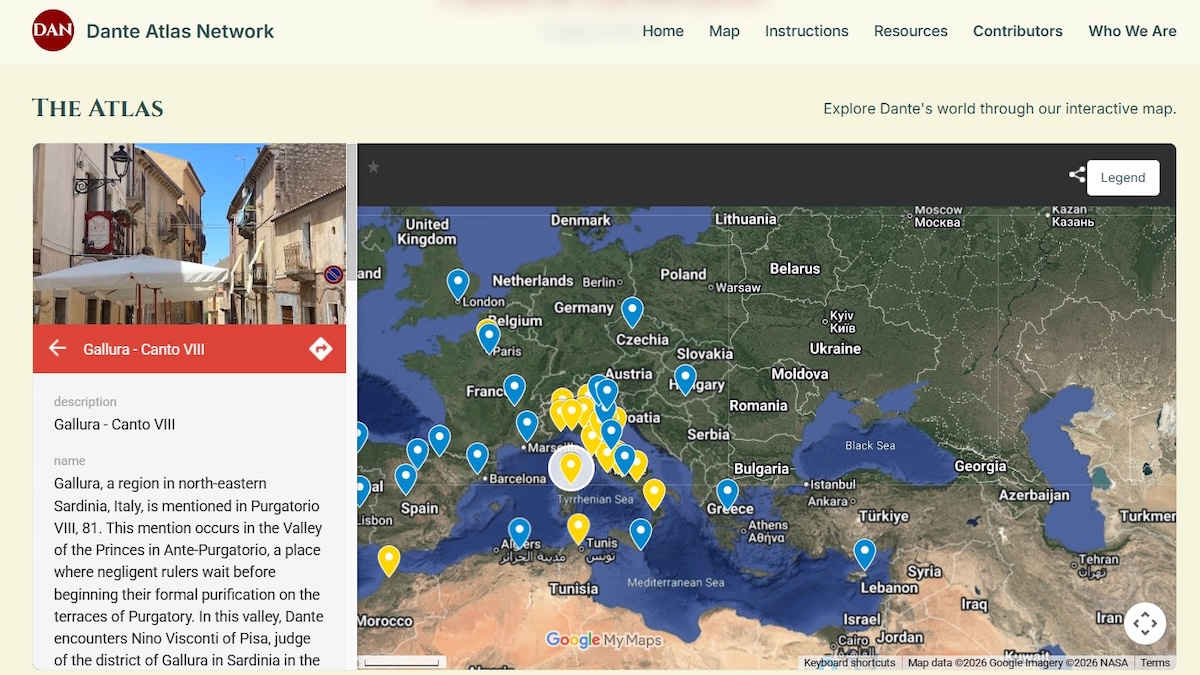
      <![CDATA[<figure class="image image-right"><a href="https://learning.nd.edu/assets/663030/original/dante_atlast_network.jpg"><img src="https://learning.nd.edu/assets/663030/dante_atlast_network.jpg" alt="Screenshot of the Dante Atlas Network website. The page header includes the navigation links Home, Map, Instructions, Resources, Contributors, and Who We Are. Below, a section titled “The Atlas” displays an interactive map of Europe and the Mediterranean with numerous blue and yellow location markers. A sidebar on the left shows a photograph of a narrow Italian street and information for “Gallura – Canto VIII,” describing the Sardinian region’s appearance in Dante’s Purgatorio. The map occupies most of the page and includes a legend button and standard Google Maps controls." width="600" height="338"></a>
<figcaption>A screenshot of the Dante Atlas Network website (click the image to expand)</figcaption>
</figure>
<p><em>Developed by TA <a href="https://romancelanguages.nd.edu/people/graduate-students/beatrice-maria-rosso/">Beatrice Maria Rosso</a> under the guidance of <a href="https://romancelanguages.nd.edu/people/faculty/theodore-cachey/">Ted Cachey</a>, Pizzo Family Chair in Dante Studies, the Dante Atlas Network is a digital humanities project and <a href="https://learning.nd.edu/resource-library/incorporating-multimodal-assessment-into-your-course/">multimodal assessment</a> currently live at <a href="https://danteatlas.org">danteatlas.org</a>. The project emphasizes visual learning, interdisciplinary inquiry, and collaboration. Students map Dante’s imagined geography, connect literary passages to real and symbolic places, and reflect on how space, movement, and meaning interact throughout the </em>Commedia.</p>
<p>The discussion of alternative assignments has become increasingly central in pedagogy to promote meaningful student engagement, critical thinking, and <a href="https://sdgstudies.org/magazine/article/view/34">knowledge development in the age of AI</a>. Rather than treating AI as a threat to traditional assessment, we created an assignment that approaches it as an opportunity to rethink how students engage with course material.</p>
<p>In line with current educational models that emphasize asset-based learning, the aim was to design tasks that foster creativity, critical thinking, and active participation. Within this framework, AI is not excluded but repositioned as a tool that can support student interpretation.</p>
<p>Our goal is therefore to pursue a more human-centered design for homework, assignments, and knowledge testing, in which AI, if used, promotes critical thinking rather than replacing it.</p>
<h2>Digital Humanities in the Classroom: DAN</h2>
<p>The <a href="https://danteatlas.org">Dante Atlas Network</a> (DAN) is the result of an effort to create an alternative assignment in Professor Cachey’s class Dante II. In previous years, students were required to summarize and present an academic paper on Dante’s <em>Divine Comedy</em>. This format often limited direct engagement with the primary text and prompted us to reconsider how students approach the poem.</p>
<p>Something fundamental about the poem is its deeply geographical nature, as the poet mentions an astonishing number of geographical locations, often referencing the medieval geopolitical landscape. This element of the text has frequently proven to be hard for students to approach because many of the locations may not be familiar to most.</p>
<p>These considerations were the basis of the development of the atlas. DAN is an interactive and collaborative platform that is publicly accessible online. Students are assigned two locations, one from the <em>Purgatory</em> section of the poem and the other from the <em>Paradise</em> section. A shared map was created using Google My Maps, a tool that allows users to build collaborative and customizable maps.</p>
<p>The assignment consists of three steps:</p>
<ol>
<li>Check your assigned location.</li>
<li>Pin the location on the shared map.</li>
<li>Write an analysis (around 300 words).</li>
</ol>
<p>In their analysis, students are required to provide commentary on the text, basing it on at least two scholarly sources, and to provide a personal explanation or interpretation of why that specific location is mentioned.</p>
<p>The map was then linked to the published website, where students have the option to be listed as contributors and publicly recognized on the digital platform. The website itself was programmed with the assistance of AI, in which chunks of HTML and Java were assembled and combined to resemble what DAN does today.</p>
<p>The assignment was designed, in light of the AI question in pedagogy, to shift the focus from a passive and generative activity to one that requires retrieval, interpretation, and contribution. While AI can assist in producing the post, the step-by-step, public, and interactive activity requires a substantial level of engagement from the student.</p>
<h2>The AI Question</h2>
<p>The question of AI and its role in the pedagogical setting still stands. Even in alternative assignments, it’s fundamental to think about how students might be engaging with AI and the potential <a href="https://doi.org/10.1057/s41599-024-03432-4">ethical implications</a> in a collaborative, public-facing project.</p>
<p>I am currently conducting an IRB-approved questionnaire, under the guidance of faculty members <a href="https://romancelanguages.nd.edu/people/tessa-gurney/">Tessa Gurney</a> and <a href="https://romancelanguages.nd.edu/people/kathleen-boyle/">Katie Boyle</a>, to better understand whether and how students used AI tools in the completion of their posts. Informal feedback gathered through conversations and email correspondence suggests that the assignment was positively received and that the public-facing nature of the website created a sense of pride in their work.</p>
<p>These considerations aside, this multimodal example is a creative way we have engaged our students in more human-centered assignments to deeply engage with our Dante course content.</p>
<p><em>Beatrice Maria Rosso is a graduate associate at Notre Dame Learning’s Kaneb Center for Teaching Excellence and is pursuing a Ph.D. in Italian studies at the University.</em></p>
<p class="attribution">Originally published by <span class="rel-author">Beatrice Maria Rosso</span> at <span class="rel-source"><a href="https://learning.nd.edu/news/alternative-assignment-in-the-age-of-ai-dante-atlas-network/">learning.nd.edu</a></span> on <span class="rel-pubdate">July 08, 2026</span>.</p>]]>
    </content>
    <link rel="enclosure" type="image/jpeg" href="https://romancelanguages.nd.edu/assets/665765/dante_atlast_network.jpg" title="Screenshot of the Dante Atlas Network website. The page header includes the navigation links Home, Map, Instructions, Resources, Contributors, and Who We Are. Below, a section titled “The Atlas” displays an interactive map of Europe and the Mediterranean with numerous blue and yellow location markers. A sidebar on the left shows a photograph of a narrow Italian street and information for “Gallura – Canto VIII,” describing the Sardinian region’s appearance in Dante’s Purgatorio. The map occupies most of the page and includes a legend button and standard Google Maps controls."/>
    <author>
      <name>Beatrice Maria Rosso</name>
    </author>
  </entry>
  <entry>
    <id>tag:romancelanguages.nd.edu,2005:News/181949</id>
    <published>2026-05-21T09:42:00-04:00</published>
    <updated>2026-05-21T09:42:06-04:00</updated>
    <link rel="alternate" type="text/html" href="https://romancelanguages.nd.edu/news-events/news/from-intimidation-to-inspiration/"/>
    <title>From intimidation to inspiration: Two Arts &amp; Letters seniors win Library Research Awards</title>
    <summary type="text">
      <![CDATA[Notre Dame seniors Gabriela Sierocka and Kate Rafford earned 2026 Library Research Awards in the Capstone or Thesis Research category.]]>
    </summary>
    <content type="html">
      <![CDATA[<p>When it comes to the <a href="https://www.library.nd.edu/">Hesburgh Libraries</a>, senior Gabriela Sierocka has a word of advice for incoming freshmen.</p>
<p>“Don’t be intimidated. All of the resources are there for students — take advantage of them.”</p>
<p>As the first-place <a href="https://library-research-award.library.nd.edu/docs/Capstone%20Thesis%20Award-1st%20Place_LRA%20Essay-Gabi%20Sierocka.pdf">winner</a> of the 2026 <a href="https://library-research-award.library.nd.edu/">Library Research Award</a> in the Capstone or Thesis Research category, Sierocka says she remembers her own trepidation as a freshman, particularly when it came to <a href="https://rarebooks.library.nd.edu/">Rare Books &amp; Special Collections (RBSC)</a>.</p>
<p>But after the <a href="https://altech.nd.edu/programs/ba-in-computer-science/">computer science</a> major added an <a href="https://romancelanguages.nd.edu/undergraduate/italian/">Italian</a> minor, emboldened by her semester abroad, she found her class visiting RBSC. There, she discovered the <a href="https://rarebooks.library.nd.edu/collections/italian_lit/dante.html">Zahm Dante Collection</a>, which inspired her thesis, “Visions of Judgment: Reimagining Dante’s Inferno in Nineteenth- and Twentieth-Century Art,” advised by <a href="https://romancelanguages.nd.edu/people/theodore-cachey/">Theodore Cachey</a>, the Pizzo Family Chair in Dante Studies and Ravarino Family Director of Italian and Dante Studies Center for Italian Studies/ Devers Family Program in Dante Studies.</p>
<p>“My senior honors thesis began with a question about seeing,” she said. “How do four artists across two centuries look at the same poem and find something entirely different in it?”</p>
<p>To answer that question, Sierocka began her research in RBSC. There, she explored depictions of Dante Alighieri’s <em>Divine Comedy</em> using the Zahm Dante Collection and medieval manuscript facsimiles.</p>
<p>When Sierocka couldn’t find what she needed in RBSC about a particular artist, she turned to the library’s catalog. The resource pointed her toward an oversized volume of the artist’s work located in the library’s stacks. The book’s size revealed illustration details that proved essential for Sierocka’s research.</p>
<p>“I needed not just books but objects: the kind of primary materials that ask you to slow down, that resist the speed of digital research and that insist on being read with attention,” she said. “The Hesburgh Libraries provided that, repeatedly and generously, in ways I could not have anticipated when I began.”</p>
<p><iframe width="1200" height="675" src="https://www.youtube.com/embed/0Hf2QI7UFsg?si=ubrKWGX6_BNREuUi" allowfullscreen="allowfullscreen"></iframe></p>
<p>Sierocka also embraced the Libraries’ digital resources, such as JSTOR Image Search and <a href="https://marble.nd.edu/">Marble — </a>a cross-institutional research tool that allows users to discover materials from the <a href="https://raclinmurphymuseum.nd.edu/">Raclin Murphy Museum of Art</a>, RBSC, and <a href="https://archives.nd.edu/">the University Archives – </a>to supplement her research.</p>
<blockquote>
<p>“What I learned through this process is that library resources do not merely support an argument — at their best, they change one,” Sierocka said. “The Hesburgh Libraries did not provide a backdrop for this thesis. They were the condition that made it possible.”</p>
</blockquote>
<p>Going forward, the research skills Sierocka developed at the Hesburgh Libraries will guide her as she pursues a master’s degree in applied digital health at Oxford University.</p>
<p>“The master’s program is very focused on writing papers and interacting with scientific research,” she said. “I will definitely take my experiences here at the Libraries and in the computer science department and apply them in the future.”</p>
<p>Sierocka was not the only student recognized in this year’s Capstone or Thesis Research category.</p>
<p>Senior Kate Rafford, who placed <a href="https://library-research-award.library.nd.edu/docs/Capstone%20Thesis%20Award-2nd%20Place_LRA-Essay-2026%20-%20Kathleen%20Rafford.pdf">second</a> in the Capstone or Thesis Research category, also credits the Hesburgh Libraries for inspiring her project, “Magic in the Sound of Her Name: Remembering the Female Faculty at Notre Dame 1970–1981,” advised by professor <a href="https://americanstudies.nd.edu/faculty/kathleen-sprows-cummings/">Kathleen Cummings</a>.</p>
<p>For her thesis, Rafford examined the coeducational experience of women who served as Notre Dame faculty members between 1970 and 1981 — a topic she discovered in the Archives while seeking resources for her original research idea.</p>
<p>“Those resources piqued my interest,” she said. “Without the help of library staff and resources, I would not have discovered this fascinating research topic, nor would I have been able to learn so much about Notre Dame’s history.”</p>
<p><iframe width="1200" height="675" src="https://www.youtube.com/embed/9mQ-lGrHiQw" allowfullscreen="allowfullscreen"></iframe></p>
<p>“I definitely could not have even started my project without the Library,” she said. “I took a thesis class in the fall that required us to attend some of the Library’s workshops. One of them introduced us to the University Archives. That is where the most important sources for my research came from.”</p>
<p>Like Sierocka in RBSC, Rafford, an <a href="https://americanstudies.nd.edu/">American studies</a> and <a href="https://economics.nd.edu/undergraduate/economics-major/">economics</a> major, initially felt intimidated by the University Archives.</p>
<p>“There’s so much there. I initially felt overwhelmed, but I worked with experts in the Archives, and they helped guide me to the resources that I needed,” she said.</p>
<p>In addition to the Archives, Rafford utilized Zotero, a program she was introduced to in a library workshop, to organize and manage all of her citations. She also took advantage of the Libraries’ search tools, print materials and databases. Through one of those databases — the <a href="https://www.library.nd.edu/news/hesburgh-libraries-acquires-complete-digital-archive-of-south-bend-tribune/">South Bend Tribune archive</a> — she found news stories from outside the University that helped her gain insight for her thesis.</p>
<blockquote>
<p>“My thesis would not have been possible without the sources I found in the University Archives collection, further supported by library workshops, databases, search tools, print and digital resources and study spaces,” she said. “I am very thankful to the library staff for guiding me through this journey and consistently supporting the resources that enable student success.”</p>
</blockquote>
<p>Before starting the process, Rafford was intimidated by the prospect of writing a 40-page thesis. In the end, she wrote more than double that. But finishing her nearly 100-page thesis doesn’t mean the end of the graduating senior’s research journey.</p>
<p>“The research skills that I have developed this year will be helpful in my future pursuits, as I will be pursuing a <a href="https://ace.nd.edu/programs/teach">master’s in education</a> with the <a href="https://ace.nd.edu/programs">Alliance for Catholic Education</a>,” she said. “I’ll be teaching third grade in Northern California, and also taking master’s in education classes here at Notre Dame. So I’ll certainly be spending more time in the Library for at least the next two summers.”</p>
<p>And like Sierocka, she has advice for incoming students who may feel overwhelmed or intimidated by the Libraries or just research in general.</p>
<p>“Seek out the librarians’ help and take workshops,” she said. “There’s so much to discover in the Library, and it is fun exploring all of the possibilities.”</p>]]>
    </content>
    <link rel="enclosure" type="image/jpeg" href="https://romancelanguages.nd.edu/assets/660458/lra_senior_rep.jpg" title="Two smiling young women lean on a railing in the Hesburgh Library. One wears a white cardigan, the other a dark green top."/>
    <author>
      <name>Becky Malewitz</name>
    </author>
  </entry>
  <entry>
    <id>tag:romancelanguages.nd.edu,2005:News/181106</id>
    <published>2026-04-27T09:32:00-04:00</published>
    <updated>2026-04-27T09:32:08-04:00</updated>
    <link rel="alternate" type="text/html" href="https://romancelanguages.nd.edu/news-events/news/2026-canvas-legends/"/>
    <title>2026 Canvas Legends Announced by Teaching &amp; Learning Technologies</title>
    <summary type="text">
      <![CDATA[When Notre Dame students go to access their course materials online, it’s highly likely their instructor is sharing them through the Canvas learning management system. The Canvas Legends Awards, sponsored by the Office of Information Technology’s Teaching &amp; Learning Technologies team, place the spotlight on faculty turning that seemingly routine task into an art.]]>
    </summary>
    <content type="html">
      <![CDATA[<p>Notre Dame uses the <a href="https://learning.nd.edu/learning-technology/canvas/">Canvas learning management system</a> (LMS) as its online platform for instructors to provide learning materials and activities that supplement face-to-face, blended, or fully online academic courses. That means when Notre Dame students go to access their course materials online, it’s highly likely their instructor is sharing them through Canvas.</p>
<p>The Canvas Legends Awards place the spotlight on faculty turning that seemingly routine task into an art.</p>
<p>“Hearing how our faculty are using Canvas to impact student learning from the perspective of the students themselves is nothing short of awesome,” said <a href="https://learning.nd.edu/about/team-bios/steve-varela/">Steve Varela</a>, director of the <a href="https://oit.nd.edu/">Office of Information Technology</a>’s <a href="https://learning.nd.edu/about/tlt/">Teaching &amp; Learning Technologies</a> (TLT) team, which sponsors the awards. “Reading their nominations of their professors brings to life the types of <a href="https://learning.nd.edu/resource-library/creating-accessible-course-sites-in-canvas/">best practices</a> we share to help both students and faculty get the most out of their Canvas experience.”</p>
<p>Exceptional use of Canvas and/or its integrated tools can take any number of forms, and students are invited to submit nominations for reasons such as:</p>
<ul>
<li>The course is designed with student learning objectives in mind.</li>
<li>Resources and workflow are built with an eye toward accessibility, from the beginning.</li>
<li>The instructor uses Canvas to communicate frequently, give timely feedback on assignments, and/or otherwise keep students engaged with the course.</li>
<li>The course, simply put, looks amazing.</li>
</ul>
<p>From the nominations received, the TLT team selects instructors whose use of Canvas best exemplifies a Canvas Legend.</p>
<p>Among other honors, this year’s recipents—as well as the winner of TLT’s inaugural <a href="#impact-award">Teaching with Technology Impact Award</a>—will be celebrated during a campus recognition event on Thursday, April 30.</p>
<h2>2025–26 Canvas Legends</h2>
<p>The TLT team is pleased to announce the 2025–26 Canvas Legends.</p>
<h3>Instructor-Level Awards</h3>
<figure class="image image-left"><img class="image-circle" src="https://learning.nd.edu/assets/657423/200x200/josephineakosa.jpg" alt="Josephine Akosa" width="200" height="200"></figure>
<p><a href="https://mendoza.nd.edu/mendoza-directory/profile/josephine-akosa/"><strong>Josephine Akosa</strong></a><br>Assistant Teaching Professor, Department of IT, Analytics, and Operations</p>
<p><strong>From the Students: </strong>“Dr. Akosa transforms Canvas into a true learning space. Everything is clear, organized, and easy to follow. Her weekly notes, videos, and interactive assignments make the course feel alive and supportive.”</p>
<p>“She uses Canvas with so much care and intention that it genuinely elevates the entire class experience.”</p>
<hr>
<figure class="image image-left"><img class="image-circle" src="https://learning.nd.edu/assets/657427/200x200/lf_lisa_farmer.jpg" alt="Lisa Farmer" width="200" height="200"></figure>
<p><a href="https://biology.nd.edu/people/lisa-farmer/"><strong>Lisa Farmer</strong></a><br>Associate Teaching Professor, Department of Biological Sciences</p>
<p><strong>From the Students:</strong> “Every week is so organized, fun to use, and never confusing. There are GIFs, it is well-organized, and very fun to navigate and look at. Every professor should use her Canvas page as reference!”</p>
<hr>
<figure class="image image-left"><img class="image-circle" src="https://learning.nd.edu/assets/657424/200x200/ashley_henry.jpeg" alt="Ashley Henry" width="200" height="200"></figure>
<p><a href="https://learning.nd.edu/about/team-bios/ashley-henry/"><strong>Ashley Henry</strong></a><br>Program Director for Graduate Student and Postdoctoral Development, Kaneb Center for Teaching Excellence</p>
<p><strong>From the Students:</strong> “Prof. Henry uses Canvas perfectly. All the in-class slides and other resources are organized in the modules folder in a way that is not overwhelming. The slides end with a class debrief and are all very engaging and creative. At the end of every class, she tells us the homework for the next class and posts homework assignments so as not to overwhelm students. I could not speak more highly.”</p>
<hr>
<figure class="image image-left"><img class="image-circle" src="https://learning.nd.edu/assets/657426/200x200/81921_erin_mclaughlin_3209jpg.jpg" alt="Erin McLaughlin" width="200" height="200"></figure>
<p><a href="https://writing.nd.edu/people/erin-mclaughlin/"><strong>Erin McLaughlin</strong></a><br>Teaching Professor, University Writing Program</p>
<p><strong>From the Students:</strong> “She is so organized and skilled in Canvas! I am never lost and know everything I need to do to be successful.”</p>
<hr>
<figure class="image image-left"><img class="image-circle" src="https://learning.nd.edu/assets/657425/200x200/joshua_seachris.jpg" alt="Joshua Seachris" width="200" height="200"></figure>
<p><a href="https://philosophy.nd.edu/people/faculty/joshua-seachris/"><strong>Joshua Seachris</strong></a><br>Associate Teaching Professor, Department of Philosophy</p>
<p><strong>From the Students:</strong> “Out of all my professors, his course is the most organized and usable for students.”</p>
<p>“The course is the most visually beautiful Canvas page I’ve seen in my five semesters, the most accessible for people with disabilities, and the most clearly defined/merit-based course I’ve seen.”</p>
<hr>
<figure class="image image-left"><img class="image-circle" src="https://learning.nd.edu/assets/657428/200x200/wang_jing_hs_800x800.jpg" alt="Jing Wang" width="200" height="200"></figure>
<p><a href="https://engineering.nd.edu/faculty/jing-wang/"><strong>Jing Wang</strong></a><br>Associate Teaching Professor, Department of Aerospace and Mechanical Engineering</p>
<p><strong>From the Students:</strong> “She has tremendous organization, with weekly sections. It is incredibly easy to navigate, to find what is due each day and what is required before each class.”</p>
<p>“It's very well-organized and thought-out. The clarity of instructions/tasks makes this class unique.”</p>
<hr>
<h3>Department-Level Award</h3>
<p>In addition to recognizing instructors, the TLT team felt the volume and breadth of nominations called for something more: a <strong>department-level Canvas Legends Award</strong>.</p>
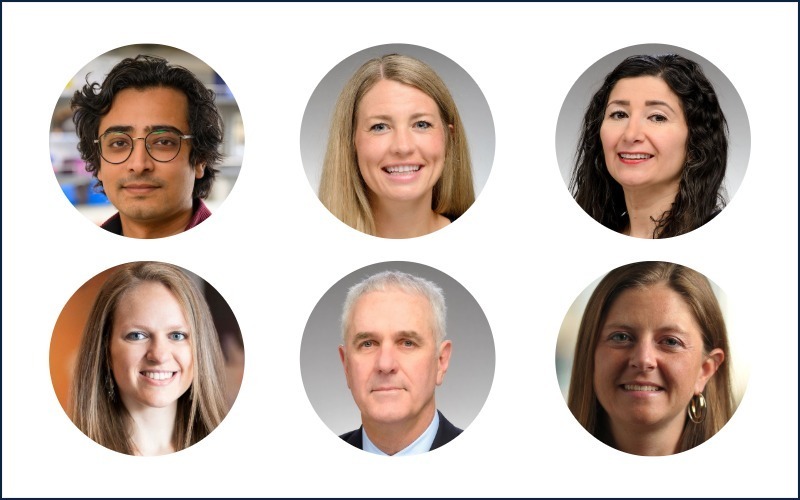
<p>The <a href="https://chemistry.nd.edu/"><strong>Department of Chemistry &amp; Biochemistry</strong></a> is honored for the culture of intentional, student-centered teaching that it fosters as well as the collective excellence its faculty bring to their course design and student experience. These faculty include <strong><a href="https://chemistry.nd.edu/people/saurja-dasgupta/">Saurja DasGupta</a></strong>, <strong><a href="https://chemistry.nd.edu/people/dana-horgen/">Dana Horgen</a></strong>, <strong><a href="https://chemistry.nd.edu/people/dana-lashley/">Dana Lashley</a></strong>, <strong><a href="https://chemistry.nd.edu/people/brittany-morgan/">Brittany Morgan</a></strong>, <strong><a href="https://chemistry.nd.edu/people/bradley-smith/">Bradley Smith</a></strong>, and <strong><a href="https://chemistry.nd.edu/people/sarah-west/">Sarah West</a></strong>, who are this year’s Department of Chemistry &amp; Biochemistry Canvas Legends.</p>
<figure class="image image-default"><img src="https://learning.nd.edu/assets/657534/fullsize/canvas_legends_12_chem_canvas_legends.jpeg" alt="Two rows of circular headshots of Department of Chemistry &amp; Biochemistry faculty members Saurja DasGupta, Dana Horgen, Dana Lashley, Brittany Morgan, Bradley Smith, and Sarah West" width="800" height="500">
<figcaption>Department of Chemistry &amp; Biochemistry Canvas Legends. Row 1, left to right: Saurja DasGupta, Dana Horgen, and Dana Lashley. Row 2: Brittany Morgan, Bradley Smith, and Sarah West.</figcaption>
</figure>
<hr>
<h2>
<a id="impact-award"></a>Inaugural Teaching with Technology Impact Award</h2>
<p>As part of this year’s Canvas Legends celebration, the TLT team will also honor the first recipient of its new Teaching with Technology Impact Award.</p>
<figure class="image image-left"><img class="image-circle" src="https://learning.nd.edu/assets/657451/200x200/elena_m_mangione_lora.jpg" alt="Elena Mangione-Lora" width="200" height="200"></figure>
<p><strong><a href="https://romancelanguages.nd.edu/people/faculty/elena-mangione-lora/">Elena Mangione-Lora</a></strong><br>Senior Teaching Professor of Spanish Language and Culture, Department of Romance Languages and Literatures</p>
<p>This award recognizes faculty who go beyond the tools themselves to use academic technology with intention, empathy, and an unwavering commitment to student-centered learning. Recipients will be selected based not only on what happens inside their Canvas courses, but also on how their philosophy shapes their classroom practice, their course design, and their engagement with the broader University community.</p>
<h2>About Teaching &amp; Learning Technologies (TLT)</h2>
<p>Housed in the OIT and working hand-in-hand with <a href="https://learning.nd.edu/">Notre Dame Learning</a>, the TLT team specializes in a range of areas related to teaching with technology, including learning management systems, academic software, learning spaces, learning analytics, and emerging technologies. This marked the third year of TLT’s Canvas Legends Awards.</p>
<p class="attribution">Originally published by <span class="rel-author">Laura Cira</span> at <span class="rel-source"><a href="https://learning.nd.edu/news/2026-canvas-legends/">learning.nd.edu</a></span> on <span class="rel-pubdate">April 27, 2026</span>.</p>]]>
    </content>
    <link rel="enclosure" type="image/jpeg" href="https://romancelanguages.nd.edu/assets/657574/canvas_legends_pattern.jpg" title="Repeating pattern of circular Canvas Legends logos.  A gold and blue graphic of the Main Building at the University of Notre Dame is above a cream banner with &quot;Canvas Legends&quot; in blue text. Below the banner is &quot;ND TLT&quot; also in blue text. The background is a repeating diagonal pinstripe pattern in navy and white."/>
    <author>
      <name>Laura Cira</name>
    </author>
  </entry>
  <entry>
    <id>tag:romancelanguages.nd.edu,2005:News/180171</id>
    <published>2026-03-20T10:15:00-04:00</published>
    <updated>2026-03-20T10:18:24-04:00</updated>
    <link rel="alternate" type="text/html" href="https://romancelanguages.nd.edu/news-events/news/celebrating-excellence-westin-smith-receives-kaneb-outstanding-graduate-student-award/"/>
    <title>Celebrating Excellence: Westin Smith Receives Kaneb Outstanding Graduate Student Award</title>
    <summary type="text">
      <![CDATA[The Department of Romance Languages and Literatures is thrilled to announce that Westin Smith, a fourth-year student in the Spanish PhD program, has been honored with the Kaneb Outstanding…]]>
    </summary>
    <content type="html">
      <![CDATA[<p>The Department of Romance Languages and Literatures is thrilled to announce that <strong data-path-to-node="1" data-index-in-node="81">Westin Smith</strong>, a fourth-year student in the Spanish PhD program, has been honored with the <strong data-path-to-node="1" data-index-in-node="171">Kaneb Outstanding Graduate Student Award</strong> for 2026.</p>
<p>This prestigious award, presented by the <strong data-path-to-node="2" data-index-in-node="41">ND Learning-Kaneb Center for Teaching Excellence</strong> and the <strong data-path-to-node="2" data-index-in-node="98">Graduate School</strong>, recognizes graduate students who demonstrate exceptional dedication and skill in the classroom. The honor includes a certificate, a formal commendation for the student’s academic file, and a $100 prize.</p>
<h3><strong data-path-to-node="4" data-index-in-node="0">The Selection Process</strong></h3>
<p>Each February, the Department invites eligible fourth- and fifth-year Spanish PhD students to submit a comprehensive teaching portfolio, including:</p>
<ul data-path-to-node="6">
<li>
<p><strong data-path-to-node="6,0,0" data-index-in-node="0">CIF Reports</strong> and course history.</p>
</li>
<li>
<p><strong data-path-to-node="6,1,0" data-index-in-node="0">Professional Development</strong> records (workshops and Kaneb teaching certificate progress).</p>
</li>
<li>
<p><strong data-path-to-node="6,2,0" data-index-in-node="0">Pedagogy Statement</strong> (maximum 3 pages).</p>
</li>
<li>
<p><strong data-path-to-node="6,3,0" data-index-in-node="0">Class Observation Reports.</strong></p>
</li>
</ul>
<p>The selection committee—comprised of the Director of Undergraduate Studies (<strong data-path-to-node="7" data-index-in-node="76">Keith Schaefer</strong>), the 10000-level coordinator (<strong data-path-to-node="7" data-index-in-node="122">Monica Jancha</strong>), the 20000/30000-level coordinator (<strong data-path-to-node="7" data-index-in-node="173">Leonardo Francalanci</strong>), and the Director of Graduate Studies—deliberates each March to select a single nominee for the Department Chair, <strong data-path-to-node="7" data-index-in-node="309">Alison Rice</strong>.</p>
<blockquote data-path-to-node="8">
<p><em data-path-to-node="8,0" data-index-in-node="0">Note: To ensure a fair process this year, the DGS recused themselves from deliberations as two mentees were among the applicants.</em></p>
</blockquote>
<h3 data-path-to-node="10"><strong data-path-to-node="10" data-index-in-node="0">Looking Ahead</strong></h3>
<p>Westin will be officially recognized at an awards ceremony and reception on <strong data-path-to-node="11" data-index-in-node="76">Thursday, April 2</strong>. We look forward to celebrating his achievements alongside the university community.</p>
<p>For our current doctoral students, nominations for the next cycle will open in <strong data-path-to-node="12" data-index-in-node="79">early February 2027</strong>. Students entering their fourth and fifth years—including Janeth Manríquez, Alejandrina Tinta, Marcelo Morales, Christopher Rziha, and Subhas Yadav—are encouraged to prepare their materials for next year’s call.</p>
<p><strong data-path-to-node="13" data-index-in-node="0">Please join us in offering Westin Smith our warmest congratulations on this well-deserved recognition of his pedagogical excellence!</strong></p>]]>
    </content>
    <link rel="enclosure" type="image/jpeg" href="https://romancelanguages.nd.edu/assets/653252/westin_news.jpg" title="Westin News"/>
    <author>
      <name>Adriana Gutierrez Gutierrez</name>
    </author>
  </entry>
  <entry>
    <id>tag:romancelanguages.nd.edu,2005:News/179828</id>
    <published>2026-03-10T10:38:00-04:00</published>
    <updated>2026-03-10T10:39:05-04:00</updated>
    <link rel="alternate" type="text/html" href="https://romancelanguages.nd.edu/news-events/news/center-for-italian-studies-and-hesburgh-libraries-launch-library-acquisitions-grant/"/>
    <title>Center for Italian Studies and Hesburgh Libraries launch library acquisitions grant</title>
    <summary type="text">
      <![CDATA[The Center for Italian Studies, in partnership with the Hesburgh Libraries, is pleased to announce the launch of the new Italian Studies Library Acquisitions Grant. ]]>
    </summary>
    <content type="html">
      <![CDATA[<p>The <a href="https://italianstudies.nd.edu/">Center for Italian Studies</a>, in partnership with the <a href="https://www.library.nd.edu/">Hesburgh Libraries</a>, is pleased to announce the launch of the new Italian Studies Library Acquisitions Grant.</p>
<p>The grant—intended to enhance the research value of the Hesburgh Libraries’ holdings across a wide range of fields associated with Italian studies—invites members of the Notre Dame community to <a href="https://docs.google.com/forms/d/e/1FAIpQLSd_XRriTU3pNjvlVDhUjPfpjfhwVYZmJxYVjN5TDfDmr-jRyw/viewform">submit proposals</a> for materials of rare, unique, or exceptional value that advance research and teaching at the University.</p>
<p>Proposed acquisitions may include: entire collections or other substantial multi-item purchases that address critical needs, unique or rare materials of scholarly or research value, or opportunities not supported by existing departmental or library funds.</p>
<p>“We are so grateful to the Center for Italian Studies for sponsoring this grant,” said <a href="https://directory.library.nd.edu/directory/departments/1">Margaret Meserve</a>, Edward H. Arnold Dean of the Hesburgh Libraries. “The Hesburgh Libraries has a long history of collecting in Italian studies, and we are especially proud of our longstanding partnership with the Devers Program in Dante Studies and the Center for Italian Studies. With the help of this new grant program, we will further strengthen our collections while inviting new opportunities for collaborations with faculty and students in all areas of Italian studies.”</p>
<h4><strong>Premier Italian Collections</strong></h4>
<p>Materials acquired with the grant will be housed and stewarded by the Hesburgh Libraries and the department of <a href="https://rarebooks.library.nd.edu/">Rare Books &amp; Special Collections</a> (RBSC).</p>
<p>RBSC is home to one of the premier collections of Italian literature in the United States. The department currently serves as one of the foremost centers in North America for the study of Dante Alighieri, with more than 3,500 volumes in the <a href="https://rarebooks.library.nd.edu/collections/italian_lit/dante.html">Zahm Dante Collection</a>.</p>
<p>Its holdings encompass works of major medieval and Renaissance Italian authors, such as Petrarch, Boccaccio, Baldassare Castiglione, Ludovico Ariosto, Pietro Bembo and Torquato Tasso; an expansive collection of early Italian printed books, including numerous incunabula and sixteenth-century books; and growing collections of modern literature, including the writings of Primo Levi.</p>
<p>“The Center for Italian Studies is proud to partner with the Hesburgh Libraries in advancing a long-term vision for Italian studies at Notre Dame,” said <a href="https://romancelanguages.nd.edu/people/faculty/theodore-cachey/">Theodore J. Cachey, Jr.</a>, the Pizzo Family Chair in Dante Studies and Ravarino Family Director of Italian and Dante Studies. “Targeted acquisitions—whether rare books, archival materials, or digital initiatives—strengthen the intellectual infrastructure that sustains interdisciplinary research and teaching. This initiative ensures that our collections continue to grow organically, coherently, and ambitiously.”</p>
<h4><strong>Global Research Destination </strong></h4>
<p>The Notre Dame Center for Italian Studies organizes and supports research, education, and outreach initiatives in Italian studies, including those of the Devers Family Program in Dante Studies, together with partners on campus, in Rome, and around the world.</p>
<p>The mission of the center is to support research and education in the languages, cultures, and peoples of Italy’s past, present, and future from a broad array of disciplinary perspectives.</p>
<p>The center supports Notre Dame faculty and students in Italian studies with its annual program of seminars and lectures; the research grants and fellowships it offers; its publications, library resources, and digital humanities initiatives; and through its internal research projects and international collaborations. The center also organizes, sponsors, and co-sponsors outreach activities to celebrate and promote the study of Italy’s languages, cultures, and peoples to Notre Dame faculty and students as well as global communities of scholars.</p>
<h4><strong>Call for Proposals</strong></h4>
<p>The grant application is now open for any member of the University of Notre Dame community whose work supports research or teaching in Italian studies. For more information, <a href="https://drive.google.com/file/d/1r9DAMca1yOFWvKZeI1AiNzYJxqsySUBY/view?usp=sharing">download the call for proposals and submission guidelines</a>.</p>
<p>Interested applicants should submit their proposal using the designated <a href="https://docs.google.com/forms/d/e/1FAIpQLSd_XRriTU3pNjvlVDhUjPfpjfhwVYZmJxYVjN5TDfDmr-jRyw/viewform"><strong>submission form</strong></a> by <strong>Wednesday, April 15.</strong></p>
<p><em>For more information, view the detailed call for proposals or</em> <em>contact </em><a href="https://italianstudies.nd.edu/people/director-and-staff/senior-research-associate/"><em>Demetrio Yocum</em></a><em>, Senior Research Associate, Center for Italian Studies, at dyocum@nd.edu; or </em><a href="https://directory.library.nd.edu/directory/employees/rcelani"><em>Ruben Celani</em></a><em>, Postdoctoral Research Associate in Italian Studies and Zahm Dante Collection Curatorial Fellow, at rcelani@nd.edu.</em></p>]]>
    </content>
    <link rel="enclosure" type="image/webp" href="https://romancelanguages.nd.edu/assets/651758/itallian_studies_grantrep.webp" title="On the left is a statue of Dante, leaning forward with his head resting on his hand. On the right is the headline &quot;Italian Studies Library Acquisitions Grant.&quot;"/>
    <author>
      <name>Hesburgh Libraries</name>
    </author>
  </entry>
  <entry>
    <id>tag:romancelanguages.nd.edu,2005:News/179696</id>
    <published>2026-03-04T09:10:00-05:00</published>
    <updated>2026-03-04T11:01:24-05:00</updated>
    <link rel="alternate" type="text/html" href="https://romancelanguages.nd.edu/news-events/news/nanovic-institute-awards-2026-laura-shannon-prize-to-eric-calderwood-author-of-on-earth-or-in-poems/"/>
    <title>Nanovic Institute awards 2026 Laura Shannon Prize to Eric Calderwood, author of 'On Earth or in Poems'</title>
    <summary type="text">
      <![CDATA[The Nanovic Institute for European Studies, part of the Keough School of Global Affairs at the University of Notre Dame, has awarded the 2026 Laura Shannon Prize in Contemporary European Studies to Eric Calderwood, associate…]]>
    </summary>
    <content type="html">
      <![CDATA[<p>The <a href="https://nanovic.nd.edu/">Nanovic Institute for European Studies</a>, part of the <a href="https://keough.nd.edu/">Keough School of Global Affairs</a> at the University of Notre Dame, has awarded the 2026 Laura Shannon Prize in Contemporary European Studies to Eric Calderwood, associate professor of comparative and world literature at the University of Illinois Urbana-Champaign, for his book <a href="https://www.hup.harvard.edu/books/9780674980365">“On Earth or in Poems: The Many Lives of al-Andalus,”</a> published by Harvard University Press.</p>
<p>The <a href="https://nanovic.nd.edu/about/laura-shannon-prize/">Laura Shannon Prize</a> is a preeminent prize within the field of European studies. It is awarded each year to the book that best transcends a focus on any one country, state or people, stimulating new ways of thinking about contemporary Europe as a whole. This year’s award cycle considered books in the humanities published in 2024 and 2025. A <a href="https://nanovic.nd.edu/news/2026-laura-shannon-prize-in-contemporary-european-studies-shortlist-named/">shortlist</a> of finalists was previously announced in November 2025.</p>
<h2 dir="ltr">2026 Laura Shannon Prize final jury statement</h2>
<p>Each year, the prize recipient is selected by a jury of accomplished scholars. The 2026 jury included:</p>
<ul>
<li dir="ltr" aria-level="1">
<p><a href="https://nanovic.nd.edu/people/visiting-scholars/magdalena-charzynska-wojcik/">Magdalena Charzyńska-Wójcik</a>, professor and chair, Department of the History of English and Translation Studies, John Paul II Catholic University of Lublin;</p>
</li>
<li dir="ltr" aria-level="1">
<p><a href="https://english.as.virginia.edu/people/rita-felski">Rita Felski</a>, John Stewart Bryan Professor, University of Virginia;</p>
</li>
<li dir="ltr" aria-level="1">
<p><a href="https://romancelanguages.nd.edu/people/joshua-lund/">Joshua Lund</a>, professor of Spanish, University of Notre Dame;</p>
</li>
<li dir="ltr" aria-level="1">
<p><a href="https://germanandslavic.nd.edu/people/robert-norton/">Robert Norton</a>, professor of German studies, University of Notre Dame; and</p>
</li>
<li dir="ltr" aria-level="1">
<p><a href="https://www.qmul.ac.uk/sllf/comparative-literature-and-culture/people/academic/profiles/tihanov.html">Galin Tihanov</a>, George Steiner Professor of Comparative Literature, Queen Mary University of London.</p>
</li>
</ul>
<p>In its statement, the final jury commended Calderwood for setting a “new standard for interpreting the ongoing relevance of our foundational political and cultural histories.” They wrote:</p>
<p>Alongside its eloquent historiographical achievement for a range of fields, “On Earth or in Poems” is strikingly relevant to our current historical crossroads. It represents the very best of the critical perspectives from the peripheries of Europe: a story emerging from the Western edge of Europe, traveling around the Mediterranean, only to rearticulate its cultural and political challenges in the space-in-between Europe and its essentially migrant history. In this, it amply offers, in the words of the Shannon Prize, “new ways of thinking about contemporary Europe as a whole,” decentering the continent as the provenance of any single cultural, aesthetic or religious tradition…. At a moment when powerful voices are agitating in favor of univocal, hierarchical and ultimately fictional “shared traditions” of Europe, Calderwood provides a response of literal and material shared histories whose contemporary expressions demonstrate multiplicity and defy any neat historical or geographical unities.</p>
<p>They concluded, “In short, it is European Studies at its best in that it aligns effortlessly and traces in admirable depth cultural, political and religious histories, while at the same time examining their relevance for a wider Europe.”</p>
<h2 dir="ltr">Prize lecture to be held next academic year</h2>
<p>The prize will be officially conferred during a public lecture and award ceremony, which will be scheduled during the 2026-27 academic year. The Nanovic Institute will share this date when it has been finalized.</p>
<p>The Laura Shannon Prize has a 17-year history of recognizing high-quality scholarship in European studies. It was made possible by a generous endowment from Laura Shannon (1939-2021) and her husband, Michael, a member of the Notre Dame class of ‘58. Laura Shannon joined the Nanovic Institute’s advisory board in 2003 and faithfully served for many years. Her professional career involved work in social services and family court mediation, and she was a frequent visitor to Europe, where she developed her French language skills. Her daughters, Claire Shannon Kelly and Katie Shannon, continue their parents’ legacy as current members of the institute’s advisory board.</p>
<p>In recent years, the prize has become a critical way to promote ongoing academic partnerships between the institute and leading scholars in European studies. A few key examples include:</p>
<ul>
<li dir="ltr" aria-level="1">
<p>2019 and 2020 recipients <a href="https://www.concordia.ca/faculty/max-bergholz.html">Max Bergholz</a> and <a href="https://history.uchicago.edu/directory/Eleonory-Gilburd">Eleonory Gilburd</a> joining the institute’s graduate workshop in Ireland on academic storytelling in August 2022;</p>
</li>
<li dir="ltr" aria-level="1">
<p>2021 recipient <a href="https://research.manchester.ac.uk/en/persons/peter.gatrell">Peter Gatrell</a> keynoting the institute’s <a href="https://nanovic.nd.edu/events/2023/04/29/conference-reimagining-europe-from-its-peripheries/">Reimagining Europe from Its Peripheries conference</a> in March 2023 and returning to a seminar on storytelling from the margins in August 2025;</p>
</li>
<li dir="ltr" aria-level="1">
<p>2022 recipient <a href="https://lcl.unm.edu/people/faculty/pamela-cheek.html">Pamela Cheek</a> co-leading a working group with the Nanovic Institute beginning in 2025;</p>
</li>
<li dir="ltr" aria-level="1">
<p>2023 recipient <a href="https://history.ucla.edu/person/stella-ghervas/">Stella Ghervas</a> serving as a Nanovic Institute research affiliate and external reviewer; and</p>
</li>
<li dir="ltr" aria-level="1">
<p>2024 recipient <a href="https://www.mmll.cam.ac.uk/ref35">Rory Finnin</a> returning to Notre Dame for its <a href="https://nanovic.nd.edu/events/2025-ukrainian-studies-conference/">Ukrainian Studies Hub conference</a> in March 2025 and as a visiting professor in the 2025-26 academic year.</p>
</li>
</ul>
<p><a href="https://nanovicnd.submittable.com/submit/15e0c8d8-282c-42bb-b751-5406bba55572/laura-shannon-prize-in-contemporary-european-studies">Nominations</a> are currently open through March 31, 2026, for the 2027 Laura Shannon Prize, focused on books within history and the social sciences published in 2024 or 2025. Authors and publishers may submit nominations.</p>
<p>The Nanovic Institute for European Studies is part of the University of Notre Dame’s Keough School of Global Affairs. The Laura Shannon Prize is one way it contributes to the intellectual, cultural and research aims of the school, bringing renowned scholars from around the globe to campus and integrating them into coursework, public events and research projects. It forms a critical bridge between Notre Dame and Europe, enriching the reach of this global University.</p>
<p><strong id="docs-internal-guid-1b6747bf-7fff-76bf-fafe-1101c21b5c1e">For more information about the Nanovic Institute and the Laura Shannon Prize (including <a href="https://nanovic.nd.edu/about/laura-shannon-prize/winners/">past recipients</a>), visit <a href="https://nanovic.nd.edu/prize">nanovic.nd.edu/prize</a>.</strong></p>
<p class="attribution">Originally published by <span class="rel-author">Keith Sayer</span> at <span class="rel-source"><a href="https://nanovic.nd.edu/news/nanovic-institute-awards-2026-laura-shannon-prize-to-eric-calderwood-author-of-on-earth-or-in-poems/">nanovic.nd.edu</a></span> on <span class="rel-pubdate">March 04, 2026</span>.</p>]]>
    </content>
    <link rel="enclosure" type="image/jpeg" href="https://romancelanguages.nd.edu/assets/651059/calderwood_web_thumb.jpg" title="Author Eric Calderwood smiles beside his orange book, &quot;On Earth or in Poems,&quot; featuring white stylized script."/>
    <author>
      <name>Keith Sayer</name>
    </author>
  </entry>
  <entry>
    <id>tag:romancelanguages.nd.edu,2005:News/178928</id>
    <published>2026-02-03T14:24:00-05:00</published>
    <updated>2026-02-03T14:24:36-05:00</updated>
    <link rel="alternate" type="text/html" href="https://romancelanguages.nd.edu/news-events/news/italian-studies-students-retrace-travels-of-renowned-writers-in-weeklong-trip-to-rome-florence-and-naples/"/>
    <title>Italian studies students retrace travels of renowned writers in weeklong trip to Rome, Florence, and Naples</title>
    <summary type="text">
      <![CDATA[Eighteenth-century German author Johann Wolfgang von Goethe once wrote that, “only in Rome is it possible to understand Rome.” A group of University of Notre Dame students discovered that to be true last semester by participating in the centuries-old literary tradition of &quot;The Journey to Italy.&quot;…]]>
    </summary>
    <content type="html">
      <![CDATA[<p>Eighteenth-century German author Johann Wolfgang von Goethe once wrote that, “only in Rome is it possible to understand Rome.”</p>
<p>A group of University of Notre Dame students discovered that to be true last semester by participating in the centuries-old literary tradition of "The Journey to Italy."</p>
<p>Students in the Italian studies course, The Literature of the Journey to Italy: From the Renaissance to the Present,  participated in a fully funded, week-long trip to Italy — including visits to Rome, Florence, and Naples — through a College of Arts &amp; Letters <a href="https://alresources.nd.edu/all-resources/teaching-beyond-the-classroom/">Teaching Beyond the Classroom grant</a>, which is designed to advance learning through real-life encounters.</p>
<p>In the course, students were challenged to understand Italy’s role in shaping European and American literary imagination; develop skills in close reading, textual analysis, and cultural interpretation; and critically reflect on their own travel experiences in relation to literary models.</p>
<p>“There's a difference between reading about something and seeing and experiencing it,” said senior Gracie Speicher, who majors in environmental science with a supplementary major in Italian studies. “Whenever you’re able to take something from the classroom and see it in real life, it means a lot more.”</p>
<p>Led by <a href="https://romancelanguages.nd.edu/people/faculty/theodore-j-cachey-jr/">Ted Cachey</a>, the Pizzo Family Chair in Dante Studies and Ravarino Family Director of Italian and Dante Studies, and Italian studies Ph.D. candidate <a href="https://romancelanguages.nd.edu/people/graduate-students/alessandro-matone/">Alessandro Matone</a>, eight undergraduate students spent the first portion of the fall 2025 semester reading and discussing the accounts of notable creatives who traveled to, and were influenced by, Italy — books such as Michel de Montaigne's <em>Journal of Travels in Italy</em>, Johann Wolfgang von Goethe’s <em>Italian Journey</em>, Mark Twain’s <em>The Innocents Abroad,</em> and Mary McCarthy’s <em>The Stones of Florence.</em></p>
<p>Then, in mid-October, students followed in the footsteps of those famous authors.</p>
<p>“You're putting yourself into this tradition by going one level deeper in terms of what Italy has to offer,” said senior Matthew Fishburne.</p>
<h2><strong>Encountering Italy through travel literature </strong></h2>
<figure class="image image-left"><img src="https://al.nd.edu/assets/643337/img_0588_300x.jpg" alt="A group of eight smiling students pose in front of the white marble Monument to Carlo Goldoni in Rome. One man in a striped jacket sits on the lowest step, while seven others are on higher steps surrounding the ornate statue of Goldoni and allegorical figures. Green trees and a cloudy sky are in the background." width="300" height="400">
<figcaption>Students in the course pose in front of the Monument of Goethe in Rome. Photo provided.</figcaption>
</figure>
<p>Cachey knew he wanted to offer a course that intertwined the history of the journey to Italy and explored travel narratives of some of the best 17th-to-20th-century writers.</p>
<p>“You really get to know these authors and see how travel to Italy changes them,” Speicher said.</p>
<p>The trip built upon the students’ already deep understanding of Italian history, art, and culture. Most of the students had studied Italian and traveled abroad through Notre Dame Global programs in Rome and Bologna, as well as through other internships and teaching experiences, such as a year in Rome as part of the School of Architecture program.</p>
<p>But this experience, they said, was completely different.</p>
<p>“This trip was a continuation of a journey that students had started years before, when they began studying Italian at Notre Dame,” Matone said. “This was a culmination of their language and culture studies at Notre Dame.”</p>
<p>During their time in Italy, the students retraced the routes once taken by high-status aristocrats on the Grand Tour, a traditional early modern practice of traveling across Europe for cultural education and refinement.</p>
<p>“Our first day in Rome, we entered the city like Montaigne and Goethe through the Porta Flaminia, starting our whole trip at Piazza del Popolo,” said fifth-year architecture student Rylan Chromy. “From there, we went to the Spanish Steps, and just followed the path that a Grand Tourist would have taken through the city.”</p>
<blockquote class="pull">
<p>“Sometimes when you’re traveling, you can get caught up in worrying about what things you should be seeing and just trying to pack it all in. And when you're doing it in an academic way, it forces you to stop and reflect on the things that you're seeing much more.”</p>
<p>-senior Gracie Speicher, who majors in environmental science with a supplementary major in Italian studies.</p>
</blockquote>
<p>Once a marquee destination for Grand Tour travelers, the Villa Albani is now typically accessible only to scholars and specialists. During their visit, however, the Notre Dame students were granted a private tour of the estate, which has remained virtually unchanged since the mid-eighteenth century.</p>
<p>“You get more time to see some of the more culturally significant things, as opposed to what’s just the most popular,” Fishburne said.</p>
<p>The itinerary intentionally highlighted the authors that students encountered in class, allowing their works to come vividly to life. In Rome, students visited Goethe’s apartment, and in Florence they took in the breathtaking cityscape that Mary McCarthy memorably described from the vantage point of San Miniato al Monte.</p>
<p>“There was a connection between the syllabus, the readings we did, the work we did in class, and the work we did on place in Italy,” Matone said.</p>
<p>Although the week was full of site visits and excursions, the trip offered a more intentional and thoughtfully curated experience for the students.</p>
<p>“Sometimes when you’re traveling, you can get caught up in worrying about what things you should be seeing and just trying to pack it all in,” Speicher said. “And when you're doing it in an academic way, it forces you to stop and reflect on the things that you're seeing much more.”</p>
<h2><strong>Fostering a global community</strong></h2>
<figure class="image image-right"><img src="https://al.nd.edu/assets/643336/unnamed_2_300x.jpg" alt="A woman in a blue top and black blazer speaks to students in an art gallery. Behind her is a large painting of a figure in a white gown and blue hat, framed drawings, and vibrant small artworks. The room has terracotta floors and a wooden beam ceiling." width="300" height="400">
<figcaption>Students tour museums during their travels in Italy for the course The Literature of the Journey to Italy: From the Renaissance to the Present. Photo provided.</figcaption>
</figure>
<p>The trip allowed students to connect more deeply with their classmates, Cachey and Matone, and faculty at <a href="https://rome.nd.edu/">Notre Dame Rome</a>.</p>
<p>Students met with a variety of Notre Dame faculty while in Italy, including <a href="https://romancelanguages.nd.edu/people/faculty/charles-l-leavitt-iv/">Charles Leavitt</a>, the William Payden Associate Professor of Romance Languages and Literatures, who met the students at the American Academy in Rome — where he is <a href="https://al.nd.edu/news/latest-news/italian-professor-wins-rome-prize-supporting-research-on-italian-american-postwar-interactions/#:~:text=Charles%20Leavitt%2C%20an%20associate%20professor,Mellon%20Foundation%20Rome%20Prize.&amp;text=Bestowed%20by%20the%20American%20Academy,creating%20in%20the%20Italian%20capital.">currently a Rome Prize Fellow</a> — and <a href="https://rome.nd.edu/about/faculty/chiara-sbordoni/">Chiara Sbordoni</a>, an associate teaching professor of Italian at Notre Dame Rome. Faculty back in South Bend, including associate professor of film studies <a href="https://ftt.nd.edu/people/olivier-morel/">Olivier Morel</a>, and art history professor <a href="https://artdept.nd.edu/people/heather-minor/">Heather Hyde Minor</a>, also helped students prepare to understand the city and art they would encounter on the trip.</p>
<p>During their travels, students also enjoyed more personalized experiences, such as dinner with Sbordoni and her family and an outing to an AS Roma football game. Students said these moments become some of their most cherished memories from the week.</p>
<p>“It was going beyond the classroom in not necessarily just a geographical sense, but also going beyond the classroom with people that we had only really interfaced with in a classroom,” said senior Beau Steller, who majors in economics and Italian.</p>
<h2><strong>A lifelong appreciation</strong></h2>
<figure class="image image-left"><img src="https://al.nd.edu/assets/643334/img_0548_300x.jpg" alt="A small group of young adults stands before the grand Porta Pia archway in Rome. The light-colored stone arch features classical columns, statues, and Latin inscriptions. A dark green banner with a dark red central design hangs inside the arch. Distant buildings and a traffic light are visible." width="300" height="400">
<figcaption>Students pose in front of Porta Flaminia in Rome, where authors Montaigne and Goethe also passed through. Photo provided.</figcaption>
</figure>
<p>As students work on their capstone project for the course — in which they will create their own travel narratives — many reflect on their experiences in the context of the authors who came before them.</p>
<p>“The reasons why someone would travel to Rome centuries ago, you still see that transformation and those motivations still today,” Speicher said.</p>
<p>For Chromy, drawing is a unique way to connect with the Grand Tourist travelers.</p>
<p>“They're taking sketches of everything they see,” he said. “I made sure that I got a sketchbook specifically for the trip.”</p>
<p>The trip showed students that not only are they part of this long line of travelers to Italy, but also that their own connection to the country is a dynamic, lifelong affair.</p>
<p>“Every time I visit Italy, I always wonder, ‘Is this the last time?’” Fishburne said. “I've just been really grateful and surprised that the next time came pretty quickly.”</p>
<p>For Cachey and Matone, who hope to offer the course again, the class’s impact only deepens once students are back home.</p>
<p>“We’ve tried to model a meaningful, elevated conversation about Italian culture and history,” Cachey said. “My hope is that students continue to nurture that conversation with others throughout their careers and their lives.”</p>
<p class="attribution">Originally published by <span class="rel-author">Hailey Oppenlander</span> at <span class="rel-source"><a href="https://al.nd.edu/news/latest-news/italian-studies-students-retrace-travels-of-renowned-writers-in-weeklong-trip-to-rome-florence-and-naples/">al.nd.edu</a></span> on <span class="rel-pubdate">January 12, 2026</span>.</p>]]>
    </content>
    <link rel="enclosure" type="image/jpeg" href="https://romancelanguages.nd.edu/assets/647325/unnamed_4_1_1200x.jpg" title="Seven smiling students stand on a wet paved surface, some holding black umbrellas. One student wears a navy and gold Notre Dame jacket. Behind them, a panoramic view of Florence's terracotta rooftops, the Arno River, bridges, and the Duomo under an overcast sky."/>
    <author>
      <name>Hailey Oppenlander</name>
    </author>
  </entry>
  <entry>
    <id>tag:romancelanguages.nd.edu,2005:News/178919</id>
    <published>2026-02-03T13:21:00-05:00</published>
    <updated>2026-02-03T13:22:21-05:00</updated>
    <link rel="alternate" type="text/html" href="https://romancelanguages.nd.edu/news-events/news/learning-to-teach-teaching-to-learn-advice-from-prof-alessia-blad-miller/"/>
    <title>Learning to Teach, Teaching to Learn: Advice from Prof. Alessia Blad-Miller</title>
    <summary type="text">
      <![CDATA[After 26 years at Notre Dame, Alessia Blad-Miller, director of the Center for the Study of Languages and Cultures, is preparing to retire from her administrative role at the University. Beatrice Maria Rosso, a graduate associate at Notre Dame Learning’s Kaneb Center for Teaching Excellence, talked with Alessia about her teaching journey, her impact, and the lessons she leaves behind.]]>
    </summary>
    <content type="html">
      <![CDATA[<p>After 26 years at Notre Dame, <a href="https://cslc.nd.edu/about/people/alessia-blad-miller/">Alessia Blad-Miller</a> is preparing to retire from her administrative role at the University, but the community she helped build will carry her legacy forward.</p>
<p>Alessia is the director of the <a href="https://cslc.nd.edu/">Center for the Study of Languages and Cultures</a>. She has also served as Italian language course coordinator in the <a href="https://romancelanguages.nd.edu/">Department of Romance Languages and Literatures</a> and has been teaching undergraduate Italian language courses since 1999. In addition to her work with undergraduates, she leads the Foreign Language Teaching Methodology &amp; Second Language Acquisition course, where she trains graduate students to become effective and compassionate instructors.</p>
<p>In her decades of teaching and leading, she has shaped not only a program but generations of students and instructors who see language as a bridge to empathy, curiosity, and connection, and I couldn’t miss the chance to sit down with her to reflect on her teaching journey, her impact, and the lessons she leaves behind.</p>
<p><strong>Beatrice Maria Rosso: Looking back on your 26 years of teaching and coordinating in Italian Studies here, what are you most proud of building or leaving behind in the program?</strong></p>
<p><strong>Alessia Blad-Miller: </strong>I am most proud of helping build a culture where students feel both challenged and supported, where learning Italian is not just about grammar and vocabulary but about curiosity, discovery, connection, and embracing a new culture with an open mind. The strongest legacy, I hope, is the community of learners and teachers who see language study as a gateway to empathy and intercultural understanding.</p>
<p><strong>BMR: You started by teaching undergraduates, and later also trained graduate students in Teaching Methods. What differences did you notice between those two experiences?</strong></p>
<p><strong>ABM:</strong> Teaching undergraduates is about opening doors and helping them discover a new world through Italian language and culture. Training graduate students to be successful instructors is more about mentorship: giving them tools, confidence, and perspective so they can, in turn, open doors for others. With undergraduate students, the reward is seeing their first spark of discovery; with graduates, it is seeing them grow into thoughtful, independent educators.</p>
<p><strong>BMR: What are the most important skills or values you tried to pass on to your students–both undergraduates learning Italian and graduates learning how to teach?</strong></p>
<p><strong>ABM:</strong> To undergraduates: persistence, curiosity, and the joy of expressing themselves in another language. And also the rewards of discovering a new culture, understanding a different way of living, thinking, and behaving. To graduates: I hope I have modeled empathy and shown that teaching is not about perfection but about connection, about meeting students where they are and helping them move forward.</p>
<p><strong>BMR: How do you teach “how” to teach?</strong></p>
<p><strong>ABM:</strong> You model it. You demonstrate that preparation is essential, but so is flexibility. You cultivate a safe space for experimentation, reflection, and even mistakes. The core of the practice is helping future teachers analyze their own learning journey, translating that understanding into strategies that honor diverse student needs.</p>
<p>To me teaching is not about perfection; it’s about progress. We must model understanding, compassion, and grace, showing that to be a teacher is to be—first and foremost—a learner.</p>
<p><strong>BMR: What do you think are the biggest challenges facing language programs today?</strong></p>
<p><strong>ABM: </strong>Facing funding and enrollment pressures, and competing with other fields, language programs must combat the misconception that English is enough, especially since demanding student schedules limit the sustained engagement required to prove languages are essential for global citizenship.</p>
<p>A key challenge for language programs is the essential integration of intercultural competence, which moves beyond simple fluency to equip students with the ability to understand cultural nuances and mediate communication for effective global collaboration.</p>
<p><strong>BMR: What is one piece of advice you would give to someone who wants to teach?</strong></p>
<p><strong>ABM: </strong>We must see ourselves not just as instructors, but as the primary model for lifelong learning and human excellence. One cannot teach effectively without passion—it is the fuel for our work. But that passion must be paired with patience for the process, with humility to learn from our students, and with respect for our students as learners, as human beings. The greatest educators in my personal experience have been those who understand they are modeling behavior, not just transferring knowledge.</p>
<hr>
<p>It was an honor for me to hear Alessia’s point of view on teaching and directing. By leading a program, she did not simply create excellent curricula and syllabi; she created a strong community of passionate students and passionate educators. Alessia’s core teaching philosophy, that “teaching is not about perfection; it's about progress,” made it possible for first-time teachers like me to approach the profession knowing that it is okay to make mistakes as long as we learn from them.</p>
<p>Knowing that she is leaving the program in great hands makes it a little easier to say goodbye as she moves onto her next chapter, but I will be forever grateful for the role she played in my journey as a teacher.</p>
<p><em><a href="https://learning.nd.edu/about/team-bios/beatrice-maria-rosso/">Beatrice Maria Rosso</a> is a graduate associate at Notre Dame Learning’s Kaneb Center for Teaching Excellence and is pursuing a Ph.D. in Italian studies at the University.</em></p>
<p class="attribution">Originally published by <span class="rel-author">Beatrice Maria Rosso</span> at <span class="rel-source"><a href="https://learning.nd.edu/news/learning-to-teach-teaching-to-learn-advice-from-prof-alessia-blad-miller/">learning.nd.edu</a></span> on <span class="rel-pubdate">February 03, 2026</span>.</p>]]>
    </content>
    <link rel="enclosure" type="image/jpeg" href="https://romancelanguages.nd.edu/assets/647292/alessia_blad_miller.jpg" title="Alessia Blad-Miller"/>
    <author>
      <name>Beatrice Maria Rosso</name>
    </author>
  </entry>
  <entry>
    <id>tag:romancelanguages.nd.edu,2005:News/176739</id>
    <published>2025-11-21T09:56:00-05:00</published>
    <updated>2025-11-21T14:23:12-05:00</updated>
    <link rel="alternate" type="text/html" href="https://romancelanguages.nd.edu/news-events/news/new-faculty-publication-juan-vitullis-mis-piletas-alemanas/"/>
    <title>New Faculty Publication: Juan Vitulli's "Mis piletas alemanas"</title>
    <summary type="text">
      <![CDATA[We are excited to announce the release of Professor Juan Vitulli&#39;s new book, My German Swimming Pools / Mis piletas alemanas.   An Argentinian professor arrives in Berlin in the middle of a pandemic winter without knowing a word of German. Lost…]]>
    </summary>
    <content type="html">
      <![CDATA[<p>We are excited to announce the release of <strong>Professor Juan Vitulli's</strong> new book, <strong><em>My German Swimming Pools / Mis piletas alemanas</em></strong>.</p>
<p> </p>
<p>An Argentinian professor arrives in Berlin in the middle of a pandemic winter without knowing a word of German. Lost in the language, he finds his only safe territory in the water: he sets out to cross the city by swimming in its public swimming pools, tracing an imaginary canal that connects these artificial bodies scattered throughout the urban geography. Mis piletas alemanas (My German Swimming Pools) is a book about the foreigner and their relationship with what they do not understand. Each swimming pool — from the functionalism of Lankwitz to the art nouveau splendor of Charlottenburg, from the melancholy Mariendorf to the Olympic one where Jeanette Campbell won her silver medal in 1936— becomes an exercise of impossible translation: swimming is the only way to fully inhabit a place where the language expels him. But it is also a book about repetition as a method, about how the regular movement of the body in the water can order the days and, perhaps, the writing itself. With humor, precision, and a perspective that oscillates between urban chronicle and personal drift, Juan Vitulli constructs a liquid map of Berlin where the ghosts of the past coexist with old people who swim slowly, grumpy lifeguards, threatening swans, and the constant promise of a summer that never quite arrives. A reflection on rootlessness, translation, and that universal<strong><br></strong>language only spoken underwater.</p>
<p> </p>
<p><a href="https://www.bulkeditores.com/bulk-libros/mis-piletas-alemanas" class="btn">Publisher Website </a></p>]]>
    </content>
    <link rel="enclosure" type="image/jpeg" href="https://romancelanguages.nd.edu/assets/639426/mis_piletas_alemanas_portada_final.jpg" title="Juan Vitulli Book/ Mis piletas alemanas"/>
    <author>
      <name>Adriana Gutierrez Gutierrez</name>
    </author>
  </entry>
  <entry>
    <id>tag:romancelanguages.nd.edu,2005:News/176634</id>
    <published>2025-11-18T14:49:00-05:00</published>
    <updated>2025-11-18T14:49:41-05:00</updated>
    <link rel="alternate" type="text/html" href="https://romancelanguages.nd.edu/news-events/news/margaret-meserve-named-edward-h-arnold-dean-of-hesburgh-libraries/"/>
    <title>Margaret Meserve named Edward H. Arnold Dean of Hesburgh Libraries</title>
    <summary type="text">
      <![CDATA[Margaret Meserve, vice president and associate provost for academic space and support at the University of Notre Dame, has been appointed the Edward H. Arnold Dean of the Hesburgh Libraries by University President Rev. Robert A. Dowd, C.S.C. Meserve, who has served as interim library dean since August 2024, now begins a five-year term.]]>
    </summary>
    <content type="html">
      <![CDATA[<figure class="image image-right"><img src="https://news.nd.edu/assets/638768/300x/margaret_meserve.jpg" alt="A smiling woman with short brown hair and olive green glasses. She wears a black collared shirt with a light brown speckled pattern and small gold stud earrings." width="300" height="366">
<figcaption>Margaret Meserve, the Edward H. Arnold Dean of the Hesburgh Libraries (Photo by Michael Caterina/University of Notre Dame)</figcaption>
</figure>
<p><a href="https://provost.nd.edu/people/margaret-meserve/">Margaret Meserve</a>, vice president and associate provost for academic space and support at the University of Notre Dame, has been appointed the Edward H. Arnold Dean of the <a href="https://www.library.nd.edu/">Hesburgh Libraries</a> by University President <a href="https://president.nd.edu/">Rev. Robert A. Dowd, C.S.C.</a></p>
<p>Meserve, who has served as interim library dean since August 2024, now begins a five-year term.</p>
<p>“The Hesburgh Libraries are vital to Notre Dame’s aspirations to be the leading global Catholic research university,” Father Dowd said. “Over her 20-year career at the University, Margaret has demonstrated exceptional leadership and dedication to Notre Dame’s mission, including most recently as interim dean, earning the respect and admiration of her colleagues. I am confident that under her guidance, the libraries will continue to advance the University’s research, teaching and learning goals while fostering Notre Dame’s engagement with the global scholarly community.”</p>
<p><a href="https://provost.nd.edu/people/john-mcgreevy/">John T. McGreevy</a>, the Charles and Jill Fischer Provost, said Meserve was well-suited to her new role. “Margaret is an unusually gifted administrator,” he said. “She possesses vision, superb communications skills and a deep commitment to Notre Dame. All of this has been in evidence in her multiple roles at Notre Dame.”</p>
<p>Meserve was appointed vice president and associate provost for academic space and support in 2023. Prior to that, she served as associate dean for the humanities and faculty affairs and director of space planning in the <a href="https://al.nd.edu/">College of Arts and Letters</a> and co-director of the <a href="https://glynnhonors.nd.edu/">Glynn Family Honors Program</a>.</p>
<p>“A professor of history, Margaret is passionate about rare books and special collections, sophisticated in her use of data and a leading scholar of the history of the book,” McGreevy noted. “The search committee praised her work as interim dean, her compelling vision for the library and her commitment to deepening the engagement of the libraries with all of Notre Dame’s colleges and schools.”</p>
<p>In her continued capacity as vice president and associate provost, Meserve will maintain oversight of the <a href="https://undpress.nd.edu/">University of Notre Dame Press</a>, the <a href="https://raclinmurphymuseum.nd.edu/">Raclin Murphy Museum of Art</a> and the <a href="https://performingarts.nd.edu/">DeBartolo Performing Arts Center</a>. She will be handing off her current duties related to academic space and support to Vice President and Associate Provost <a href="https://provost.nd.edu/people/david-go/">David Go</a> by the end of the academic year.</p>
<p>As dean, Meserve will lead a team of nearly 140 faculty and staff members at the flagship Hesburgh Library — which houses the Navari Family Center for Digital Scholarship, the Medieval Institute Library, the University Archives and Rare Books &amp; Special Collections — and three specialty libraries located across the Notre Dame campus (architecture, business and music).</p>
<p>“I’m honored and excited to continue working with our expert library faculty and staff to strengthen support for research, teaching and the preservation of knowledge at Notre Dame for generations to come,” Meserve said. “And I look forward to advancing new initiatives in information literacy, digital collections and scholarly communication that will advance the Hesburgh Libraries as a leader among university research libraries.”</p>
<p>Meserve received her bachelor’s degree in classics from Harvard and her master’s and doctorate in Renaissance history from the University of London. She taught at Princeton for two years before coming to Notre Dame in 2003. She has won fellowships from the National Endowment for the Humanities and the American Council of Learned Societies, and she is a fellow of the American Academy in Rome.</p>
<p>In her research and teaching, Meserve focuses on the Italian Renaissance and the histories of printing and book production, history writing, humanist culture and the papacy in the 15th and 16th centuries. Both her undergraduate and graduate courses often make use of the Hesburgh Libraries’ rare books and manuscripts as a way to introduce students to the material evidence of history. Her most recent book, “Papal Bull: Print, Politics, and Propaganda in Renaissance Rome,” <a href="https://al.nd.edu/news/latest-news/papal-bull-earns-notre-dame-historian-margaret-meserve-her-second-marraro-prize/">won the American Catholic Historical Association’s Helen &amp; Howard Marraro Prize</a> for the most distinguished work in Italian history published in 2021.</p>
<p>She is currently working on a translation of the “Commentaries” of Pope Pius II, a Renaissance pope known for his scholarship and the only pope ever to compose an autobiography while in office.</p>
<p class="attribution">Originally published by <span class="rel-author">Kate Garry</span> at <span class="rel-source"><a href="https://news.nd.edu/news/margaret-meserve-named-edward-h-arnold-dean-of-hesburgh-libraries/">news.nd.edu</a></span> on <span class="rel-pubdate">November 17, 2025</span>.</p>]]>
    </content>
    <link rel="enclosure" type="image/jpeg" href="https://romancelanguages.nd.edu/assets/639061/margaret_meserve_1200.jpg" title="A woman with short brown hair, olive green glasses, and a black collared shirt with light brown dots smiles at the camera."/>
    <author>
      <name>Kate Garry</name>
    </author>
  </entry>
  <entry>
    <id>tag:romancelanguages.nd.edu,2005:News/175309</id>
    <published>2025-09-26T15:03:00-04:00</published>
    <updated>2025-10-22T10:06:59-04:00</updated>
    <link rel="alternate" type="text/html" href="https://romancelanguages.nd.edu/news-events/news/book-launch-gender-battles-latin-american-women-war-and-feminism/"/>
    <title>Book Launch - Gender Battles: Latin American Women, War, and Feminism</title>
    <summary type="text">
      <![CDATA[Gender Battles: Latin American Women, War, and Feminism by Vanesa Miseres uncovers the often-overlooked voices of Latin American women who engaged with war – not just as observers, but as journalists, memoirists, and activists – from the 19th to mid-20th centuries. Focusing on conflicts like…]]>
    </summary>
    <content type="html">
      <![CDATA[<p><em>Gender Battles: Latin American Women, War, and Feminism</em> by Vanesa Miseres uncovers the often-overlooked voices of Latin American women who engaged with war – not just as observers, but as journalists, memoirists, and activists – from the 19th to mid-20th centuries. Focusing on conflicts like the War of the Pacific, the World Wars, and the Spanish Civil War, Miseres shows how these women used their writing and organizing to challenge gender roles, navigate nationalism, and shape emerging feminist ideas. Blending gender studies and Latin American history, the book reveals war as both a political and deeply personal force, reshaping our understanding of feminist activism and Latin American identity.</p>
<p><em><strong>Author</strong></em>:</p>
<p><strong><a href="https://kellogg.nd.edu/people/vanesa-miseres">Vanesa Miseres</a></strong><br><em>Associate Professor of Spanish, University of Notre Dame<br>Kellogg Institute Faculty Fellow</em></p>
<p> </p>
<p><em><strong>Event Details: </strong></em></p>
<p>Date: Friday, December 5, 2025</p>
<p>Time : 4:00pm - 6:00pm</p>
<p>Event Location: Decio Hall / Romance Languages Commons area.</p>
<p> </p>]]>
    </content>
    <link rel="enclosure" type="image/jpeg" href="https://romancelanguages.nd.edu/assets/632221/screenshot_2025_09_26_145746.jpg" title="The cover features a dramatic and expressive painting, likely in the style of Latin American muralism. The artwork depicts a group of women in various poses of anguish, struggle, and defiance, set against a backdrop that suggests conflict or turmoil. The powerful imagery visually represents the book's themes of war, social upheaval, and the experiences of women in Latin America."/>
    <author>
      <name>Adriana Gutierrez Gutierrez</name>
    </author>
  </entry>
  <entry>
    <id>tag:romancelanguages.nd.edu,2005:News/174703</id>
    <published>2025-09-03T14:20:00-04:00</published>
    <updated>2025-09-03T14:20:12-04:00</updated>
    <link rel="alternate" type="text/html" href="https://romancelanguages.nd.edu/news-events/news/raclin-murphy-museum-of-art-and-institute-for-latino-studies-will-host-brenda-cardenas-wisconsin-poet-laureate-at-notre-dame/"/>
    <title>Raclin Murphy Museum of Art and Institute for Latino Studies will host Brenda Cárdenas, Wisconsin Poet Laureate, at Notre Dame</title>
    <summary type="text">
      <![CDATA[…]]>
    </summary>
    <content type="html">
      <![CDATA[<figure class="image image-right"><strong><img src="https://raclinmurphymuseum.nd.edu/assets/628443/unnamed.jpg" alt='Flyer for a Poets &amp; Art event with Brenda Cárdenas at the Raclin Murphy Museum of Art, University of Notre Dame, on Wednesday, September 24, 2025, at 5:30 p.m.  Cárdenas, Wisconsin Poet Laureate, will discuss ekphrastic writing and perform her poems. The flyer features an image of Cárdenas smiling, colorful abstract shapes, and images of her books, "Trace" and "boomerang."' width="600" height="928"></strong></figure>
<p>The University of Notre Dame’s Raclin Murphy Museum of Art and the Institute for Latino Studies (ILS) are pleased to present “Poets &amp; Art with Brenda Cárdenas,” featuring the Poet Laureate of Wisconsin, who will give a talk and perform a selection of her art-inspired poems. The program will take place on Wednesday, September 24, at 5:30 p.m. at the Museum, to launch a joint initiative between the Museum and the ILS.</p>
<p>“ILS is thrilled that one of our flagship programs, Letras Latinas, is partnering with the Raclin Murphy Museum to bring Brenda Cárdenas to campus. We can’t seriously study the Latino experience in the United States without consideration of Latino contributions to the arts. The event with Ms. Cárdenas exemplifies the Institute’s ongoing commitment to the arts,” said Jason Ruiz, director of the Institute for Latino Studies.</p>
<p>“Poets &amp; Art: Ekphrasis at the Raclin Murphy Museum of Art” is a multi-year initiative that emerged from conversations between Francisco Aragón, director of the ILS’s literary initiative, and Bridget Hoyt, the Museum’s Curator of Education for Academic Programs. “Bridget has been facilitating my class visits to the Museum for years. The opening of our new Museum inspired us to dream up this more ambitious collaboration, which Brenda’s visit inaugurates,” said Aragón, a poet, Letras Latinas director, and ILS faculty fellow.</p>
<p>"We are delighted to host and inspire Brenda Cárdenas's visit. This important partnership with ILS furthers the importance of the arts and sense of community across Notre Dame," said Joe Becherer, director of the Raclin Murphy Museum of Art.</p>
<p>In addition to her public presentation on Wednesday, Cárdenas will be Poet-in-Residence at the Museum on Thursday and Friday, studying and researching in the galleries to write new ekphrastic pieces. On Saturday, September 27, she will offer an ekphrastic writing workshop in the galleries for members of the South Bend community. Cárdenas will also spend time with students, including MFA candidates in the Creative Writing Program and undergraduate students in Aragón’s literature course. A PhD student from the English Department will conduct an oral history interview with her.</p>
<p>"Brenda Cárdenas's visit occurs in the context of Notre Dame's broader, institutional support of the arts through the Arts Initiative. We are delighted to join the other sponsors in supporting this imaginative, interdisciplinary project,” said Michael Schreffler, director of the Notre Dame Arts Initiative. Other campus sponsors include the Initiative on Race and Resilience, the Department of Romance Languages and Literatures, and Somos ND, the campus-wide initiative.</p>
<p>In all, “Poets &amp; Art: Ekphrasis at the Raclin Murphy Museum of Art” will showcase six poets in the next three years, each giving a public presentation at the Museum, offering a community workshop, and meeting with Notre Dame students. Nicaraguan American poet Adela Najarro will be the second poet in the series next March.</p>
<p><strong>About the Raclin Murphy Museum of Art</strong></p>
<p>With origins dating to 1875, the Raclin Murphy Museum of Art (formerly Snite Museum of Art) is one of the oldest and most highly regarded university art museums in America. Founded on the principle that art is essential to understanding individual, shared and diverse human experiences and beliefs, the Museum encourages close looking and critical thinking. Experiences with significant, original works of art are intended to stimulate inquiry, dialogue and wonder for audiences across the academy, the community and around the world—all in support of the University of Notre Dame’s Catholic mission. The renowned permanent collection contains more than 31,000 works that represent many cultures and periods of world art history. For more information, visit raclinmurphymuseum.nd.edu.</p>
<p><strong>About Letras Latinas</strong></p>
<p><em>Letras Latinas</em>, the literary initiative at the Institute for Latino Studies (ILS), strives to enhance the visibility, appreciation, and study of Latino literature both on and off the campus of the University of Notre Dame. It emphasizes programs that support newer voices, foster a sense of community among writers, and place Latino writers in community spaces. <em>Letras Latinas</em> is a founding member of the <a href="https://www.poets.org/academy-american-poets/poetry-coalition">Poetry Coalition</a>, a national alliance working to promote the values poets bring to our culture and the important contribution poetry makes in the lives of people of all ages and backgrounds. Letras Latinas celebrated its 20th anniversary in 2024.</p>
<p><strong>Media contact:</strong><br>Francisco Aragon<br>Director, Letras Latinas<br>Institute for Latino Studies<br>University of Notre Dame<br><a href="mailto:faragon@nd.edu" target="_blank" rel="noopener">faragon@nd.edu</a><br>(574) 229-2933</p>
<p><strong>Media contact:</strong><br>Gina Costa<br>Communications Program Director<br>Raclin Murphy Museum of Art<br><a href="mailto:gcosta@nd.edu">gcosta@nd.edu</a><br>(574) 631-4720</p>
<p class="attribution">Originally published by <span class="rel-author">Raclin Murphy Museum of Art</span> at <span class="rel-source"><a href="https://raclinmurphymuseum.nd.edu/about/news/raclin-murphy-museum-of-art-and-institute-for-latino-studies-will-host-brenda-cardenas-wisconsin-poet-laureate-at-notre-dame/">raclinmurphymuseum.nd.edu</a></span> on <span class="rel-pubdate">September 03, 2025</span>.</p>]]>
    </content>
    <link rel="enclosure" type="image/jpeg" href="https://romancelanguages.nd.edu/assets/628492/unnamed.jpg" title="Flyer for a Poets &amp; Art event with Brenda Cárdenas at the Raclin Murphy Museum of Art, University of Notre Dame, on Wednesday, September 24, 2025, at 5:30 p.m.  Cárdenas, Wisconsin Poet Laureate, will discuss ekphrastic writing and perform her poems. The flyer features an image of Cárdenas smiling, colorful abstract shapes, and images of her books, &quot;Trace&quot; and &quot;boomerang.&quot;"/>
    <author>
      <name>Raclin Murphy Museum of Art</name>
    </author>
  </entry>
  <entry>
    <id>tag:romancelanguages.nd.edu,2005:News/173890</id>
    <published>2025-07-18T08:22:00-04:00</published>
    <updated>2025-07-18T08:22:50-04:00</updated>
    <link rel="alternate" type="text/html" href="https://romancelanguages.nd.edu/news-events/news/emilia-perez-et-la-mexicanisation-de-la-france-2/"/>
    <title>Emilia Pérez et la « mexicanisation » de la France</title>
    <summary type="text">
      <![CDATA[In 2024, Jacques Audiard&#39;s film Emilia Pérez, set in Mexico, received numerous awards in France and the United States, while also sparking significant controversy in Mexico. Simultaneously, the term &quot;Mexicanization&quot; became widespread in much of the French political…]]>
    </summary>
    <content type="html">
      <![CDATA[<p>In 2024, Jacques Audiard's film <strong>Emilia Pérez</strong>, set in Mexico, received numerous awards in France and the United States, while also sparking significant controversy in Mexico. Simultaneously, the term <strong>"Mexicanization"</strong> became widespread in much of the French political and media sphere to describe a society that is becoming increasingly violent due to drug trafficking. What does this French focus on Mexico teach us?</p>
<p>For the complete article in French, please click <a href="https://aoc.media/opinion/2025/07/15/emilia-perez-et-la-mexicanisation-de-la-france/">here.</a></p>
<p> </p>
<p>This article was <strong>published by our PhD Student, Maria Zaira Ruiz</strong>.</p>]]>
    </content>
    <author>
      <name>Adriana Gutierrez Gutierrez</name>
    </author>
  </entry>
  <entry>
    <id>tag:romancelanguages.nd.edu,2005:News/173092</id>
    <published>2025-06-05T14:55:00-04:00</published>
    <updated>2025-06-05T15:03:14-04:00</updated>
    <link rel="alternate" type="text/html" href="https://romancelanguages.nd.edu/news-events/news/new-faculty-publication-johannes-junge-ruhlands-making-history-in-manuscripts/"/>
    <title>New Faculty Publication: Johannes Junge Ruhland's "Making History in Manuscripts"</title>
    <summary type="text">
      <![CDATA[We&#39;re thrilled to announce the publication of Prof. Johannes Junge Ruhland&#39;s new book, Making History in Manuscripts: The Materiality of Historiography in Medieval and Early Modern Europe. This remarkable volume offers a fresh perspective on how history was conveyed …]]>
    </summary>
    <content type="html">
      <![CDATA[<div>
<p>We're thrilled to announce the publication of <strong>Prof. Johannes Junge Ruhland's</strong> new book, <em>Making History in Manuscripts: The Materiality of Historiography in Medieval and Early Modern Europe</em>. This remarkable volume offers a fresh perspective on how history was conveyed to readers during the medieval and early modern periods.</p>
<p>Dr. Junge Ruhland's work, a significant contribution to academia, explores the profound role of the manuscript medium itself in shaping historical narratives. The book argues that the <strong>material features of manuscripts</strong>—such as layout, rewriting, illumination, compilation, choice of script, and annotation—were instrumental in defining history conceptually. This means that the <strong>makers of these manuscripts</strong> played as crucial a role in history-writing as the authors themselves.</p>
<p>Spanning the ninth to the sixteenth centuries and drawing on examples from across Western Europe in both Latin and vernaculars, the ten chapters uncover specific contexts, from 13th-century Corbie to 15th-century Zurich, while highlighting a shared practice of history-writing. <em>Making History in Manuscripts</em> invites us to reconsider medieval and early modern historiography by acknowledging its fundamental material dimension.</p>
<p>We congratulate Dr. Junge Ruhland on this outstanding publication and thank him for his invaluable contribution to the field.</p>
</div>
<div> </div>
<div>For more information please visit the link : <a href="https://doi.org/10.1515/9783111557007" target="_blank" data-saferedirecturl="https://www.google.com/url?q=https://doi.org/10.1515/9783111557007&amp;source=gmail&amp;ust=1749231405610000&amp;usg=AOvVaw1Ln_4pcWj7ZxwkDN1ybVbw" rel="noopener">https://doi.org/10.1515/<wbr>9783111557007</wbr></a>
</div>
<div> </div>
<div>
<figure class="image image-right"><a href="https://doi.org/10.1515/9783111557007"><img src="https://romancelanguages.nd.edu/assets/618659/mhwm_cover_1_.png" alt="Making History with Manuscripts in Medieval and Early Modern Europe. 
Berlin: De Gruyter, 2025" width="300" height="424"></a></figure>
</div>
<div> </div>
<div> </div>]]>
    </content>
    <link rel="enclosure" type="image/png" href="https://romancelanguages.nd.edu/assets/618659/mhwm_cover_1_.png" title="Making History with Manuscripts in Medieval and Early Modern Europe. &#10;Berlin: De Gruyter, 2025"/>
    <author>
      <name>Adriana Gutierrez Gutierrez</name>
    </author>
  </entry>
  <entry>
    <id>tag:romancelanguages.nd.edu,2005:News/172889</id>
    <published>2025-05-28T09:20:00-04:00</published>
    <updated>2025-05-28T09:21:26-04:00</updated>
    <link rel="alternate" type="text/html" href="https://romancelanguages.nd.edu/news-events/news/dr-carlos-a-jauregui-to-present-new-publication-in-mexico/"/>
    <title>Dr. Carlos A. Jáuregui to Present New Publication in Mexico</title>
    <summary type="text">
      <![CDATA[The Department is proud to announce that Dr. Carlos A. Jáuregui, a distinguished member of our faculty, will be presenting his new book in a series of events in Mexico. These presentations offer a unique opportunity for attendees to engage directly with Dr. Jáuregui and co-authors, gaining insight…]]>
    </summary>
    <content type="html">
      <![CDATA[<p>The Department is proud to announce that Dr. Carlos A. Jáuregui, a distinguished member of our faculty, will be presenting his new book in a series of events in Mexico. These presentations offer a unique opportunity for attendees to engage directly with Dr. Jáuregui and co-authors, gaining insight into the research and creative process behind this significant new publication.</p>
<p>We encourage all interested colleagues, students, and the wider academic community in Mexico to attend one of these sessions.</p>
<h3 data-sourcepos="11:1-11:26">Presentation Schedule:</h3>
<p><strong>Event 1: National School of Anthropology and History (ENAH)</strong></p>
<ul data-sourcepos="14:1-18:0">
<li data-sourcepos="14:1-14:24">
<strong>Date:</strong> June 4, 2025</li>
<li data-sourcepos="15:1-15:35">
<strong>Time:</strong> 11:00 AM (Central Time)</li>
<li data-sourcepos="16:1-16:77">
<strong>Location:</strong> Room A102, ENAH – National School of Anthropology and History</li>
<li data-sourcepos="17:1-18:0">
<strong>Participants:</strong> Dr. Carlos A. Jáuregui, Dr. David M. Solodkow, Dr. Clementina Battcock, and Dr. Annia González Torres</li>
</ul>
<p><strong>Event 2: National Museum of History – Chapultepec Castle</strong></p>
<ul data-sourcepos="20:1-24:0">
<li data-sourcepos="20:1-20:24">
<strong>Date:</strong> June 5, 2025</li>
<li data-sourcepos="21:1-21:35">
<strong>Time:</strong> 12:00 PM (Central Time)</li>
<li data-sourcepos="22:1-22:82">
<strong>Location:</strong> Museum Auditorium, National Museum of History – Chapultepec Castle</li>
<li data-sourcepos="23:1-24:0">
<strong>Presenters:</strong> Matyeli García Rodríguez, Rafael Mondragón Velázquez, and the authors</li>
</ul>
<p><strong>Event 3: National Museum of Art (MUNAL)</strong></p>
<ul data-sourcepos="26:1-30:0">
<li data-sourcepos="26:1-26:24">
<strong>Date:</strong> June 5, 2025</li>
<li data-sourcepos="27:1-27:34">
<strong>Time:</strong> 6:00 PM (Central Time)</li>
<li data-sourcepos="28:1-28:61">
<strong>Location:</strong> Museo Nacional de Arte, Tacuba 8, Mexico City</li>
<li data-sourcepos="29:1-30:0">
<strong>Presenters:</strong> Cristina Ríos, Mireida Velázquez Torres, and the authors</li>
</ul>
<p>This series of events underscores Dr. Jáuregui's ongoing scholarly contributions and engagement with a broader intellectual audience. We extend our warmest congratulations to Dr. Jáuregui on this achievement.</p>
<figure class="image image-left"><img src="https://romancelanguages.nd.edu/assets/617950/enah.jpg" alt="Bartolomé de las Casas and the Biopolitical Paradigm of Colonial Modernity" width="600" height="750"></figure>]]>
    </content>
    <link rel="enclosure" type="image/jpeg" href="https://romancelanguages.nd.edu/assets/617952/munal_libro_1080_x_1080_cuadrada_generica_copia.jpg" title="Bartolomé de las Casas and the Biopolitical Paradigm of Colonial Modernity"/>
    <author>
      <name>Adriana Gutierrez Gutierrez</name>
    </author>
  </entry>
  <entry>
    <id>tag:romancelanguages.nd.edu,2005:News/172289</id>
    <published>2025-05-07T13:44:00-04:00</published>
    <updated>2025-05-08T11:04:45-04:00</updated>
    <link rel="alternate" type="text/html" href="https://romancelanguages.nd.edu/news-events/news/rachel-parroquin-gives-invited-lectures-to-international-diplomado-program-with-la-universidad-la-salle-oaxaca-mexico/"/>
    <title>Rachel Parroquin gives invited lectures to international diplomado program with la Universidad La Salle Oaxaca, Mexico</title>
    <summary type="text">
      <![CDATA[On April 11 and 12, Rachel Parroquin gave an invited lecture, “El papel de la familia, los maestros y los mediadores en el camino de la lectura autónoma” to two cohorts in the Diplomado Internacional en Promoción de la Literatura Infantil y Juvenil (LIJ). The program helps…]]>
    </summary>
    <content type="html">
      <![CDATA[<p>On April 11 and 12, <em><strong>Rachel Parroquin</strong></em> gave an invited lecture, “El papel de la familia, los maestros y los mediadores en el camino de la lectura autónoma” to two cohorts in the Diplomado Internacional en Promoción de la Literatura Infantil y Juvenil (LIJ). The program helps teachers, professors, and promotores to develop skills and knowledge in the field of children’s literature from both a theoretical and applied perspective that includes action research; the program is in its eleventh year. Students meet weekly for ten months, three hours per week.</p>
<p>The diplomado is offered through<em> Universidad La Salle Oaxaca</em> with funding support from the Fundación Alfredo Harp Helú Oaxaca (FAHHO) and coordination from Seguimos Leyendo, a key organization among those supported by FAHHO. Students and faculty in the diplomado are from several countries, including Argentina, Colombia, Peru, Spain, with the majority from Mexico, and specifically the state of Oaxaca. Guest faculty for the diplomado include well known figures in LIJ and pedagogy, including prolific writers like Sergio Andricaín, Antonio Rubio, Ana Serrano, José Urriola, and Irene Vasco.</p>
<p>The opportunity for <em>Parroquin</em> to work with the diplomado was coordinated by Dr. Socorro Bennetts, the executive director of Seguimos Leyendo. <em>Parroquin</em> met <em>Bennetts</em> last spring during her faculty exchange semester at the UPAEP in Mexico through Martha Serdio, a professional storyteller and long-time host for Notre Dame students who study abroad in Puebla. Bennetts presented to Parroquin’s Once Upon a Time class last fall. <em>Parroquin</em> had the opportunity to reciprocate by teaching Bennetts’ students in the diplomado program.</p>
<p><em>Parroquin</em> shared Jennifer Pigza’s (2016) POWER Model - a foundational theoretical chapter for Notre Dame’s Spanish Community-Engaged Learning program - and its application to engaged projects between universities, schools, and community organizations. She also presented work based on Ernest Morrell’s Every Child a Super Reader (2015) written with Pam Allyn for specific ways to cultivate independent reading habits in children. The version of Morrell’s work Parroquin shared with the students had been translated by <em>Elena Mangione</em>-<em>Lora’s</em> Introduction to Translation and Interpretation: Theory and Practice CEL class in 2019 for a parent literacy night at Holy Cross School. <em>Parroquin</em> finished the session with multiple examples of engaged work done in a variety of the courses in our department’s Spanish CEL program. Student feedback on the sessions showed that they appreciated the theory and its methodological framework, the respectful way of working together that the model promotes between university or school and community partners, and implications for how they can apply it to their own action research projects.</p>
<p><em>Parroquin</em> and <em>Bennetts</em> will be discussing further collaborations this summer for both the diplomado program in Oaxaca and with the Once Upon a Time class at Notre Dame for the fall semester.</p>
<p> </p>
<p><strong>Photo Information:</strong> El Campito student and Notre Dame student in Andrea Topash-Ríos's CEL class: Bridging the Gap: Multiple Literacies and Connecting Society, Community, and Self.</p>
<p><strong>Photography:</strong> Marc Parroquín.</p>]]>
    </content>
    <link rel="enclosure" type="image/jpeg" href="https://romancelanguages.nd.edu/assets/615669/foto_1.jpg" title="El Campito student and Notre Dame student in Andrea Topash-Ríos's CEL class: Bridging the Gap: Multiple Literacies and Connecting Society, Community, and Self. Photography: Marc Parroquín."/>
    <author>
      <name>Adriana Gutierrez Gutierrez</name>
    </author>
  </entry>
  <entry>
    <id>tag:romancelanguages.nd.edu,2005:News/172279</id>
    <published>2025-05-07T13:32:00-04:00</published>
    <updated>2025-05-08T11:05:07-04:00</updated>
    <link rel="alternate" type="text/html" href="https://romancelanguages.nd.edu/news-events/news/methodology-research-article-on-impacts-of-spanish-community-engaged-learning-cel-published-in-local-development-and-society/"/>
    <title>Methodology Research Article on Impacts of Spanish Community-Engaged Learning (CEL) Published in Local Development and Society</title>
    <summary type="text">
      <![CDATA[Rachel Parroquin and Danielle Wood’s article on “Identifying and measuring broader impacts of Spanish community-engaged learning and implications for academic programming and Latino community development” has been published with online-open access…]]>
    </summary>
    <content type="html">
      <![CDATA[<p><em><strong>Rachel Parroquin</strong></em> and <em><strong>Danielle Wood’s </strong></em>article on “Identifying and measuring broader impacts of Spanish community-engaged learning and implications for academic programming and Latino community development” has been published with online-open access [<a href="https://doi.org/10.1080/26883597.2025.2484548">https://doi.org/10.1080/26883597.2025.2484548</a>] in Local Development and Society. Doing CEL effectively involves challenges. Two key areas to address in engaged learning programs include developing and maintaining deep, robust partnerships over time and determining ways to measure outcomes and impacts in a complex ecosystem of factors. This article addresses both.</p>
<p><strong><em>As stated in the abstract:</em> </strong>As higher education institutions trend toward greater interest in the community impacts of engagement activities, understanding the range of impacts from department-wide investments in community-engaged approaches is critical for intentional programming. Most assessments, however, focus on students alone; broader community outcome areas and their associated departmental investments are less understood.</p>
<p>As community-engaged programming for <em>Romance Languages and Literatures at University of Notre Dame</em> reached its tenth year, researchers used this program as an influential case to examine community outcomes from wide-ranging departmental engagement, investment, and support both on and off-campus. This article forwards a method (outcome harvesting) for identifying and analyzing the broader impacts of community engagement across the range of partners in the Latino community; it then examines the implications of those findings for community-engaged academic program design.</p>
<p><strong>Photo Information:</strong> Notre Dame students and families discussing family histories in Tatiana Botero's CEL class: Immigration and Construction of Memory class at El Campito.</p>
<p><strong>Photography:</strong> Marc Parroquín.</p>]]>
    </content>
    <link rel="enclosure" type="image/jpeg" href="https://romancelanguages.nd.edu/assets/615679/image.jpg" title="Notre Dame students and families discussing family histories in Tatiana Botero's CEL class:  Immigration and Construction of Memory class at El Campito. Photography: Marc Parroquín."/>
    <author>
      <name>Adriana Gutierrez Gutierrez</name>
    </author>
  </entry>
</feed>