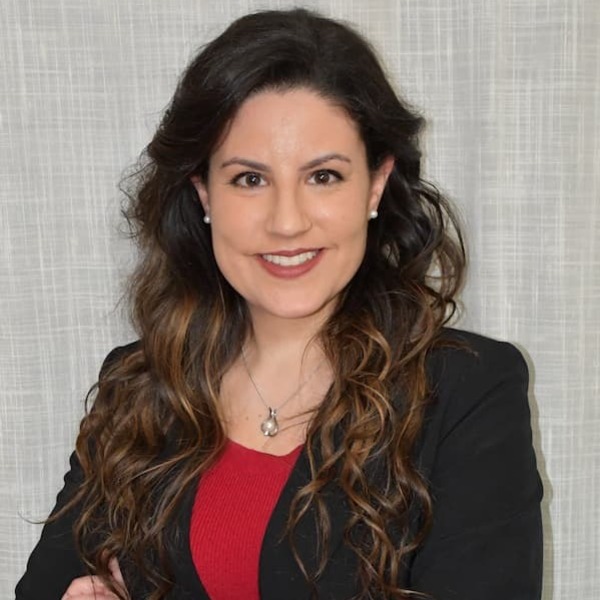
Sara Boezio
Assistant Professor of Italian
- Office Hours
- Please email to schedule an appointment
- Office
- 364 Decio Faculty Hall
Notre Dame, IN 46556 - Phone
- 574-631-3258
- sboezio@nd.edu
Education
- Ph.D. in Italian, University of Warwick
- M.A. and B.A. Honors Degree in Modern Languages and Linguistics, Scuola Normale Superiore, Pisa
- M.A. in Italian Literature and Philology, University of Pisa
- B.A. in Literature, University of Pisa
Biography
Sara Boezio is an Assistant Professor of Italian in the Department of Romance Languages and Literatures at the University of Notre Dame and an affiliate of the Center for Italian Studies and the Nanovic Institute for European Studies.
She specializes in modern Italian literature and fin-de-siècle cultural history. Her research focuses on the long nineteenth century and engages comparatively with Italian, Francophone, and Anglophone cultures, drawing on interdisciplinary approaches from philosophy, art, and intellectual history.
Her current book manuscript, Century’s Turn: Italy and the Fin de Siècle, examines the cultural conditions that reshaped perceptions of time at the turn of the twentieth century. Based on archival research, the book investigates how fin-de-siècle rhetoric became an active framework for interpreting historical change. The monograph traces the circulation of key tropes across transnational cultural networks linking Italy with European and transatlantic cultures between the 1880s and the 1910s, showing how these exchanges shaped new representations of modernity, nation-building, and cultural identity.
Professor Boezio is a co-founder of the European Society for Periodical Research (ESPRit), a research network dedicated to exploring the intersection of literature, cultural history, and media studies. She has devoted particular attention to Italian–French literary connections emerging from nineteenth-century cultural newspapers, and her work has been awarded the Italian national Galilei–Carducci Research Prize. Her second project develops her periodical studies work by examining the non-fiction writing of the early modernist novelist and literary critic Federico De Roberto (1861–1927), published in prominent Italian and transnational periodicals and extending into the years following World War I.
At an interdisciplinary level, Professor Boezio is also interested in the relationship between the humanities and the sciences. She has published on the pre-Freudian history of psychology and representations of the unconscious within the medical humanities, and has written on the application of methods from cognitive poetics and cognitive narratology to the study of lyric and narrative. This work forms part of a broader strand of her scholarship in the field of cognitive humanities.
Before joining Notre Dame, she was an MHRA (Modern Humanities Research Association) Postdoctoral Fellow in the United Kingdom and a nominated candidate for the Leverhulme Trust Early Career Fellowship at the University of Oxford. She obtained her Ph.D. from the University of Warwick, UK. Prior to her doctoral studies, she completed her B.A. and M.A. in Italian Literature and Philology at the University of Pisa, while also earning an Honors degree in Modern Languages and Linguistics from the Scuola Normale Superiore in Pisa. She subsequently expanded her work in comparative literature through fellowships in France, Canada, and the United States, including at the École Normale Supérieure in Paris and Lyon, as well as at the University of Toronto, the City University of New York, and Harvard University.
Alongside her research, Professor Boezio is strongly committed to teaching, a dedication recognized through teaching excellence awards and through her appointment as an Associate Fellow of the Higher Education Academy (now Advance HE), the leading professional body for higher education teaching in the United Kingdom. At Notre Dame, she welcomes senior and honors theses as well as graduate students interested in modern Italian literature.
Research Interests
Modern Italian literature; fin de siècle; Decadentism; Modernism; “Risorgimento” and nation-building; nineteenth-century poetry, fiction, and theatre; nineteenth-century periodical press; Gothic narrative; women writers; comparative literature; cultural history; cognitive literary studies; cognitive poetics and narratology; literary theory and criticism.